
Solar Installation in Connecticut
PV-1 licensed contractors, snow-rated engineering, and two utility territories — here is what Constitution State homeowners need to know before going solar.
Get Your Free QuoteGoing Solar in the Constitution State
Connecticut has over 106,830 solar installations generating roughly 1,632 MW of clean energy — putting the state 13th nationally for residential solar capacity. With electricity rates running 27 to 32 cents per kilowatt-hour (about 70% above the national average), the economics are compelling. But installing solar in Connecticut comes with its own set of requirements that separate experienced local contractors from out-of-state operators who do not know the landscape.
Every residential solar installer in Connecticut must hold both a Home Improvement Contractor (HIC) license and a PV-1 license from the Connecticut Department of Consumer Protection. The PV-1 designation is specific to photovoltaic system installation — it is not optional, and contractors who show up without it are operating illegally. On top of licensing, Connecticut's building codes require structural verification for snow loads, and the interconnection process differs depending on whether you are an Eversource or United Illuminating customer.
Installation Process
Site Assessment & Engineering Review
A licensed engineer evaluates your roof orientation, pitch, shading, and structural capacity. In Connecticut, this step includes verifying that your roof can support panels plus accumulated snow — the state sees significant snowfall, and structural engineering sign-off is required before permits are issued. Expect the assessment to flag roof age as well, especially on older homes in Hartford and New Haven where Victorian-era framing may need reinforcement.
Permitting & Utility Interconnection Application
Your installer submits building and electrical permits to your municipal building department, plus an interconnection application to Eversource or United Illuminating. Permit timelines in Connecticut typically run 2 to 5 weeks depending on your town. If you are in a historic district — common in Hartford, New Haven, and parts of Stamford — expect additional review from the local historic commission.
Roof Preparation & Racking Installation
Racking is secured to your roof structure using flashed penetrating mounts on asphalt shingle roofs (the most common type in Connecticut), specialized brackets on slate roofs found in older historic homes, or ballasted systems on flat commercial-style roofs. All racking must be engineered for Connecticut snow loads and wind ratings.
Panel & Inverter Installation
Panels are mounted on the racking, wiring is run to the inverter (string or microinverters), and the system is connected to your main electrical panel. A NABCEP-certified installer is required if you want to qualify for RRES rebate eligibility. Most residential installs in Connecticut take one to two days of on-roof work.
Inspection & Permission to Operate
A municipal electrical inspector verifies the installation meets Connecticut building code. Once approved, your utility — Eversource or United Illuminating — conducts a final meter configuration and issues Permission to Operate (PTO). The full timeline from contract signing to system activation typically runs 4 to 10 weeks, with most of that time spent in the permitting and interconnection queue rather than on your roof.
Connecticut Roof Types and Snow Load Engineering
The most common residential roof in Connecticut is asphalt shingle on a pitched frame — and it is the most straightforward for solar installation. Standard penetrating mounts with flashing anchor into rafters and work well on shingles under 15 years old. Standing seam metal roofs, increasingly popular on newer Connecticut homes, allow clamp-on mounting without any roof penetrations at all.
Slate roofs deserve special attention. They are a defining feature of Connecticut's historic housing stock — particularly on Victorian, Colonial Revival, and Queen Anne homes in Hartford, New Haven, and older neighborhoods statewide. Slate requires specialized mounting techniques and experienced installers who know how to work around fragile tiles without cracking them. Do not let a contractor who has never worked on slate touch your historic roof. Connecticut also requires snow load engineering verification for all solar installations — the state gets enough winter accumulation that structural sign-off is non-negotiable before any panels go up.
Connecticut Licensing, Permits & Consumer Protection
Connecticut takes solar contractor licensing seriously — and for good reason. Every solar company working on residential projects must carry two licenses: a Home Improvement Contractor (HIC) license and a PV-1 license, both issued by the Connecticut Department of Consumer Protection (CT DCP). You can verify any contractor's license status through the CT DCP online lookup tool. Additionally, NABCEP certification is required for installers seeking RRES rebate eligibility, so ask about that credential as well.
On the permit side, every solar installation requires building and electrical permits from your local municipality. Connecticut permit timelines typically run 2 to 5 weeks, though towns with historic district overlay zones may take longer. After installation, a municipal electrical inspection is required before your utility — Eversource (serving about 1.2 million customers statewide) or United Illuminating (serving roughly 325,000 customers in the New Haven and Bridgeport area) — will schedule the meter configuration and issue Permission to Operate. The full timeline from contract to activation runs 4 to 10 weeks for most Connecticut homeowners.
Explore Cities
Frequently Asked Questions
✶What licenses should a Connecticut solar installer have?+
✶How long does solar installation take in Connecticut?+
✶Can Connecticut roofs handle solar panels with snow?+
✶Can I install solar on a slate roof in Connecticut?+
✶What is the difference between Eversource and United Illuminating for solar interconnection?+
✶Do I need a permit for solar panels in Connecticut?+

Connecticut Electric Rates Are Among the Highest in America
At 27 to 32 cents per kWh — about 70% above the national average — Connecticut homeowners pay some of the steepest electricity prices in the country. Lock in a lower rate with solar.
See How Much You Can SaveWhat’s Really on Your Connecticut Electric Bill?
57% of your bill is hidden fees and charges!
Delivery Charges
Eversource and United Illuminating both add delivery charges that often exceed the actual supply cost — making up a huge chunk of your bill.
17%
of your bill
Distribution
Covers the poles, wires, and infrastructure that deliver power from the main line to your Connecticut home.
27%
of your bill
Transmission
What the utility charges for transporting power from the supply source to local towers and lines across the state.
13%
of your bill
Actual Supply
The electricity you actually use—just 43% of what you pay.
43%
of your bill
Solar Eliminates All These Charges
When you go solar, you no longer rely on the utility company to produce electricity—and no longer have to pay their ridiculous charges. Instead, you produce your own power with a low, locked-in solar rate.
Eliminate Your Electric Bill TodayIs Solar Really Free in Connecticut?
While you can’t technically get “free” solar panels, they are “free” in the sense that you can expect to pay less for solar than you already do for electricity — and it costs nothing to make the switch.
So you’re swapping out an unpredictable Eversource or United Illuminating bill for a price-protected solar payment that is usually about 40% lower. While it isn’t exactly “free,” it’s about as close as it gets.
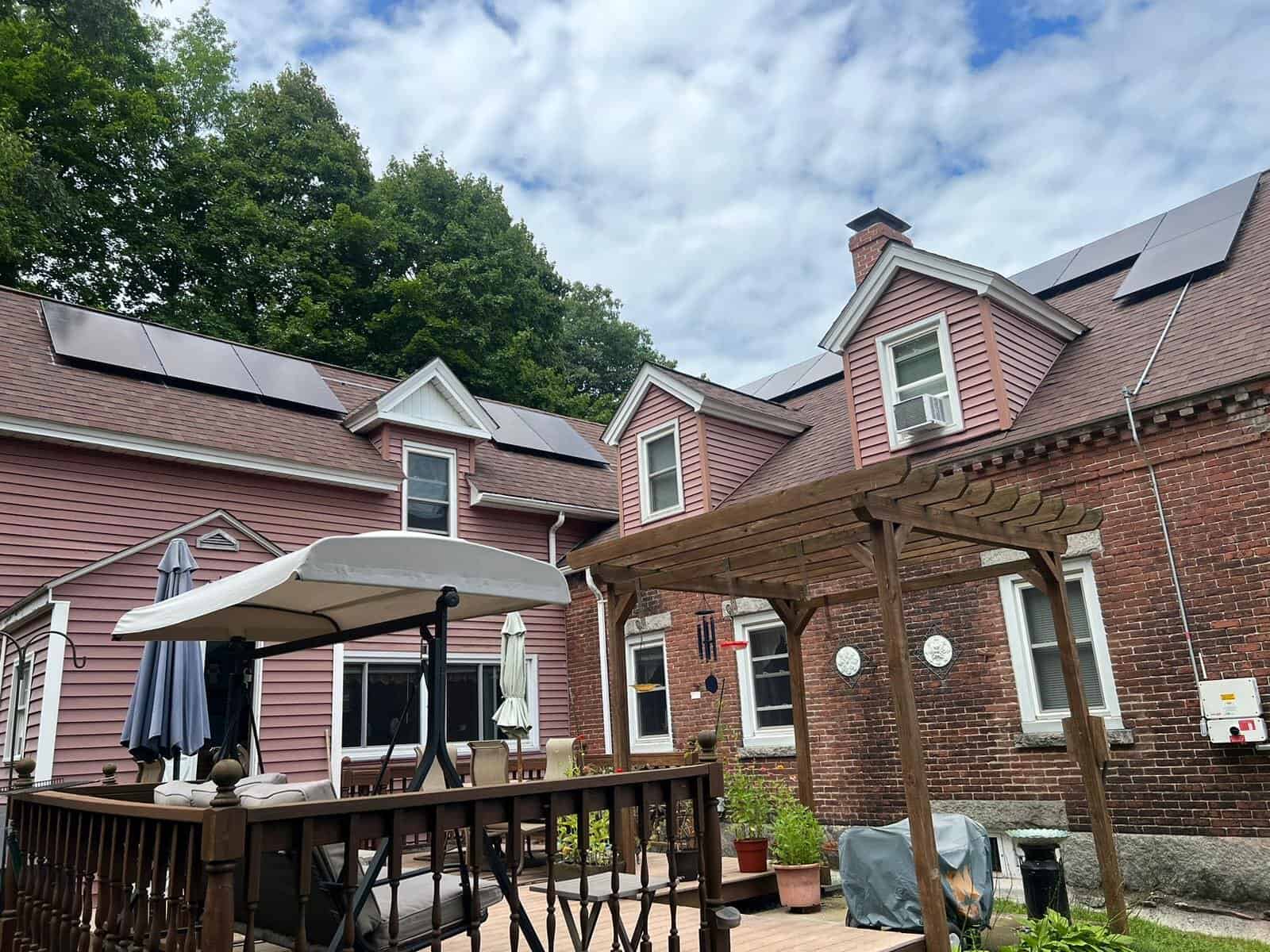
Need a New Roof? Bundle and Save.
Our Roof + Solar Bundle makes it easy for Connecticut homeowners to get a new roof and solar at the same time. Since the roof is an essential part of the solar project, you save big by bundling — and still pay less than traditional electricity from Eversource or UI.
Learn About Roof + SolarReady to Install Solar in Connecticut?
Get a free quote from PV-1 licensed Connecticut installers who know local roofs, permits, and both Eversource and United Illuminating inside and out. We handle every step from engineering to activation.
Get Your Free Quote