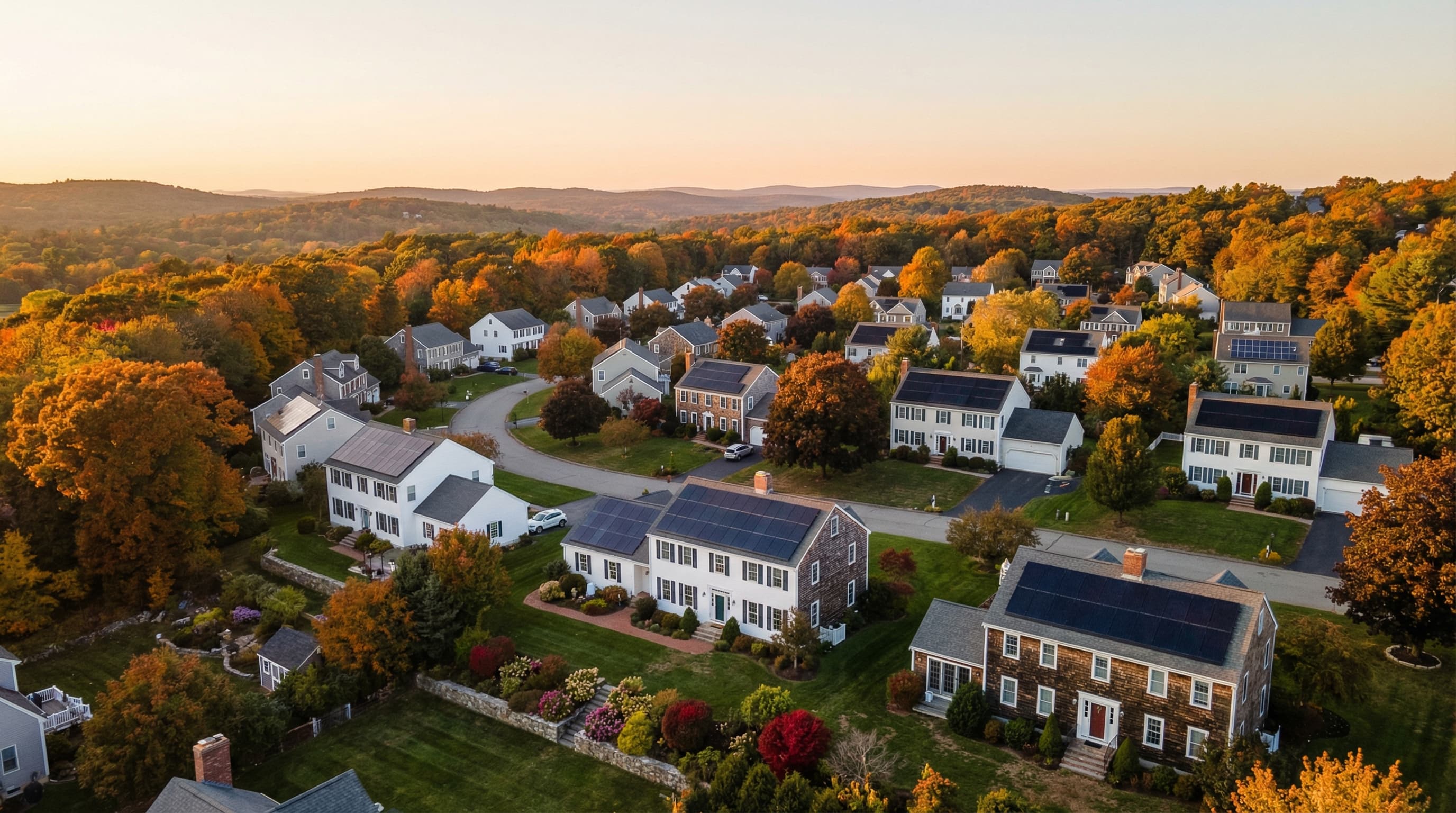
Solar Installation in Massachusetts
From HIC-licensed contractors to snow-rated racking — here is what Bay Staters need to know before panels hit the roof.
Get Your Free QuoteInstalling Solar in the Bay State
Massachusetts has more than 150,000 residential solar installations and counting, making it one of the top solar markets in the Northeast. But installing panels here is not the same as in Arizona. Between heavy snow loads, century-old triple-deckers, and two very different utility territories, the installation process requires contractors who know the local landscape inside and out.
Every residential solar installer in Massachusetts must hold a Home Improvement Contractor (HIC) registration through the Office of Consumer Affairs, and the electrical work must be completed by a licensed electrician. The state also follows the Massachusetts Building Code (780 CMR), which includes specific structural requirements for roof-mounted systems — especially important when your rafters need to handle a nor'easter's worth of wet snow on top of a 40-pound-per-square-foot panel array.
Installation Process
Site Assessment & System Design
An engineer evaluates your roof orientation, pitch, shading, and structural capacity. In Massachusetts, this step also includes verifying that your roof can handle the additional dead load of panels combined with the state's ground snow load — which ranges from 30 to 70 psf depending on your county.
Permitting & Utility Application
Your installer submits a building permit and electrical permit to your local building department, plus an interconnection application to Eversource or National Grid. Massachusetts law requires utilities to process simplified residential interconnection applications within 15 to 30 business days.
Roof Prep & Mounting
Racking is secured to your roof structure. On pitched asphalt-shingle roofs — the most common in Massachusetts — flashed lag bolts anchor directly into rafters. Flat rubber (EPDM or TPO) roofs, common on Boston and Cambridge multi-families, typically use ballasted or non-penetrating hybrid mounts to protect the membrane.
Panel & Inverter Installation
Panels are mounted on the racking, wiring is run to the inverter (string or microinverters), and the system is connected to your electrical panel. Most residential installs in Massachusetts take one to two days of on-roof work.
Inspection & Permission to Operate
A municipal electrical inspector verifies the installation meets code. Once approved, your utility conducts a final meter swap or bi-directional meter installation. Eversource and National Grid then issue Permission to Operate (PTO), and your system goes live — typically 2 to 4 weeks after passing inspection.
Roof Types and Snow Loads Across Massachusetts
The most common residential roof in Massachusetts is asphalt shingle on a pitched frame — and it is also the easiest to install solar on. Standard penetrating mounts with flashing work well on shingles, and most roofs under 15 years old can handle panels without reinforcement. Slate and cedar shake roofs, found on older homes across the state, require specialized mounting techniques and experienced installers to avoid cracking tiles.
Flat roofs are a different story. In urban areas like Boston, Cambridge, and Somerville, rubber membrane (EPDM) and TPO flat roofs are everywhere — especially on triple-deckers and multi-family buildings. These roofs use ballasted racking systems that sit on top of the membrane without penetrations, protecting the waterproofing layer. Massachusetts snow loads are among the highest in the Northeast, ranging from 30 psf on the coast to 70 psf in the Berkshires, so structural engineers must verify that rafters can support panels plus accumulated snow before any installation begins.
Massachusetts Licensing, Permits & Inspections
Every solar contractor working on Massachusetts homes must carry a Home Improvement Contractor (HIC) registration from the Office of Consumer Affairs and Business Regulation — you can verify any contractor's registration at mass.gov. The electrical portion of the install must be performed or supervised by a Massachusetts-licensed electrician, and the installer should carry both general liability and workers' compensation insurance.
On the permit side, every solar installation requires both a building permit and an electrical permit from the local municipality. Massachusetts adopted a streamlined model solar permit process, but timelines vary by city — Boston's Inspectional Services Department can take 4 to 12 weeks, while smaller towns often turn permits around in 1 to 2 weeks. After installation, a municipal electrical inspection is required before the utility will schedule the meter change and issue Permission to Operate.
Explore Cities
Frequently Asked Questions
✶Do I need a permit to install solar panels in Massachusetts?+
✶How long does Eversource interconnection take?+
✶Can solar panels handle Massachusetts snow?+
✶How do I verify that my solar installer is licensed in Massachusetts?+
✶What roof types work best for solar in Massachusetts?+
✶How long does a typical solar installation take in Massachusetts?+

Massachusetts Electric Rates Keep Climbing
Bay State electricity rates have spiked over 50% in the last 5 years. Lock in a lower rate today with solar.
See How Much You Can SaveWhat’s Really on Your Electric Bill?
57% of your bill is hidden fees and charges!
Delivery Charges
Confusing charges like the "customer charge" and "energy efficiency charge" make up most of the hidden fees on your bill.
17%
of your bill
Distribution
Covers the poles, wires, and infrastructure that deliver power from the main line to your Massachusetts home.
27%
of your bill
Transmission
What the utility charges for transporting power from the supply source to local towers and lines.
13%
of your bill
Actual Supply
The electricity you actually use—just 43% of what you pay.
43%
of your bill
Solar Eliminates All These Charges
When you go solar, you no longer rely on the utility company to produce electricity—and no longer have to pay their ridiculous charges. Instead, you produce your own power with a low, locked-in solar rate.
Eliminate Your Electric Bill TodayIs Solar Really Free in Massachusetts?
While you can’t technically get “free” solar panels, they are “free” in the sense that you can expect to pay less for solar than you already do for electricity — and it costs nothing to make the switch.
So you’re swapping out an unpredictable and constantly increasing electric bill for a price-protected solar payment that is usually about 40% lower. While it isn’t exactly “free,” it’s about as close as it gets.
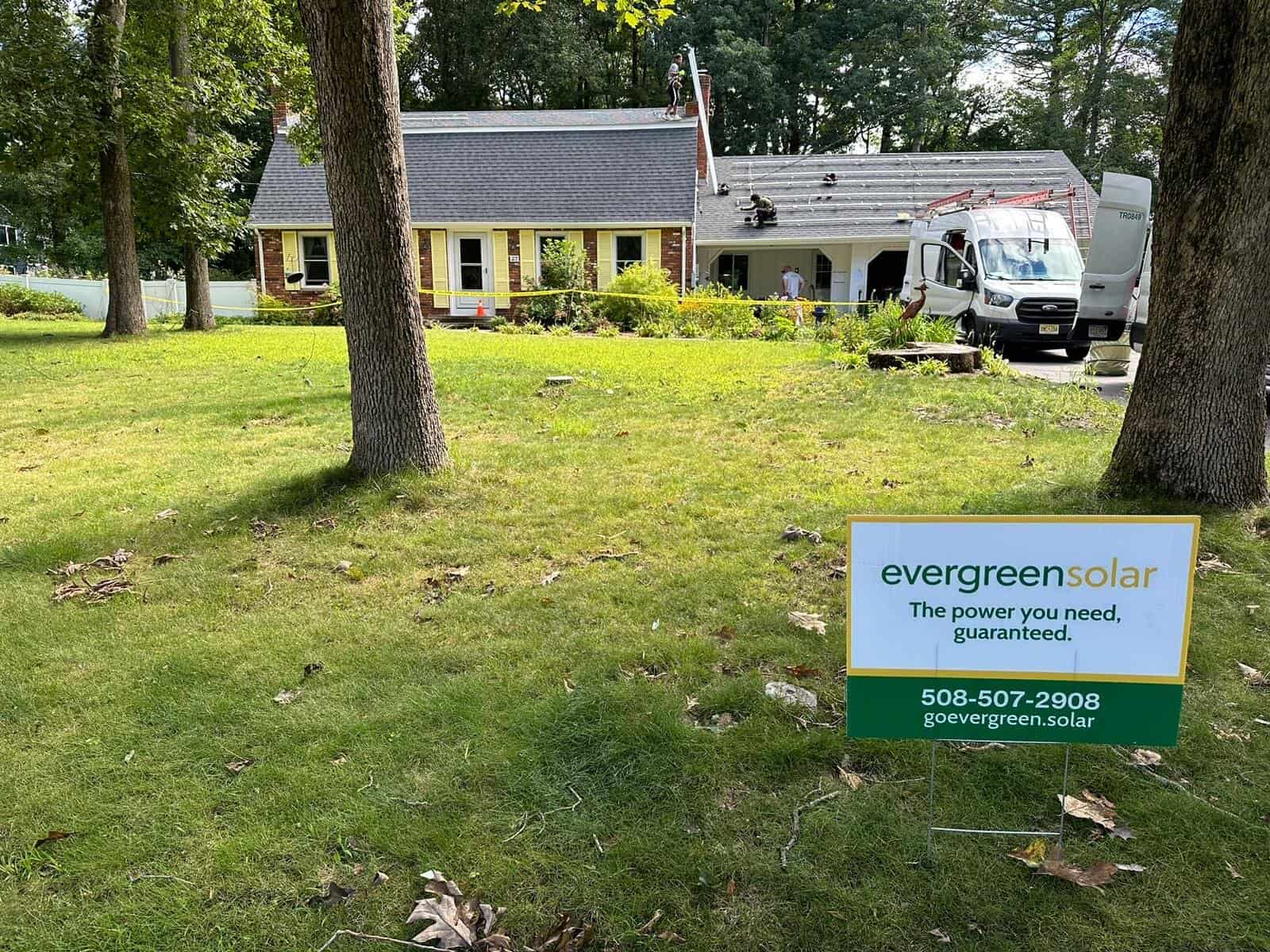
Need a New Roof? Bundle and Save.
Our Roof + Solar Bundle makes it easy for Mass homeowners to get a new roof and solar at the same time. Since the roof is an essential part of the solar project, you save big by bundling — and still pay less than traditional electricity.
Learn About Roof + SolarReady to Install Solar in Massachusetts?
Get a free quote from HIC-registered installers who know Massachusetts roofs, permits, and utilities inside and out. We handle every step from design to activation.
Get Your Free Quote