Solar Installation in Pawtucket
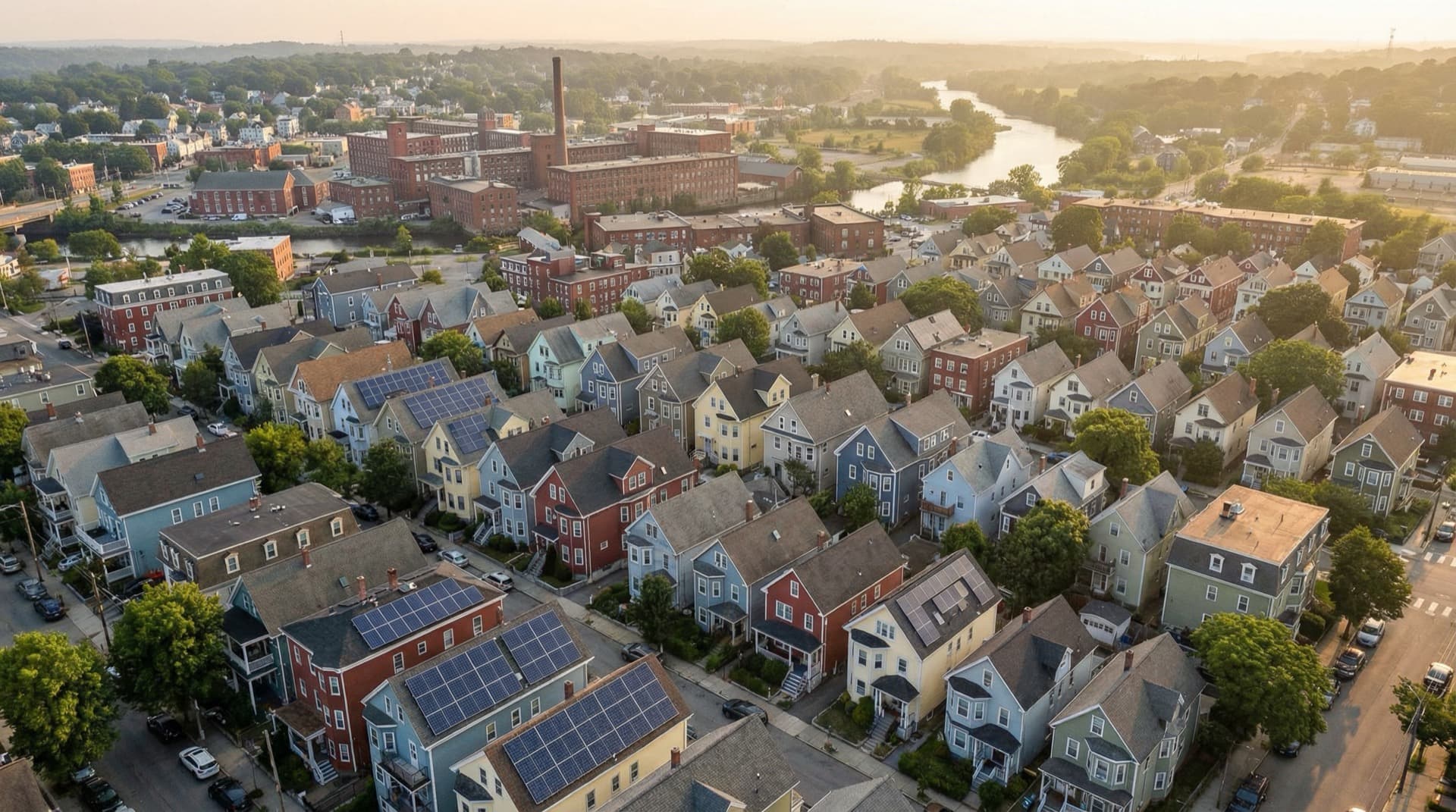
Triple-deckers, Victorian workers' cottages, mill housing — Pawtucket's older housing stock has its own installation playbook. Here is how it works.
Get Your Free QuoteWhy Installing Solar in Pawtucket Takes the Right Crew
Pawtucket is a city built on industry — and its housing stock reflects that history. The triple-deckers that line Darlington and Fairlawn, the Victorian workers' cottages scattered through Quality Hill, the dense mill housing along the Blackstone River — these are not the open-lot ranches you find in Cranston or the waterfront capes of Warwick. Installing solar here means working with older roofs, tighter lot lines, and housing types that demand specialized know-how. The upside: experienced installers have been putting panels on Pawtucket rooftops for years, and the results are consistently strong.
The math makes Pawtucket one of the best solar markets in Rhode Island. National Grid rates run 27–28 cents per kWh — among the highest in the nation — and Pawtucket's more affordable housing stock means electricity takes an outsized bite from household budgets. The REG Program, 1:1 net metering through National Grid, and Rhode Island's 100% renewable by 2033 mandate all create tailwinds. From Pleasant View to Woodlawn, panels are going up on every roof type this mill city has to offer.
Installation Process
Site Assessment & Structural Engineering
A licensed engineer evaluates your roof — whether it is a flat rubber membrane on a Fairlawn triple-decker, a pitched roof on a Quality Hill workers' cottage, or a converted mill building near the Blackstone River. Older housing stock is the norm in Pawtucket, so structural verification is especially important. The engineer confirms the framing can support panels plus Rhode Island's wind and snow loads, checks for any needed roof repairs, and assesses shading from neighboring buildings or mature trees.
City of Pawtucket Building Permit
Your installer submits building and electrical permit applications to the City of Pawtucket Building Department. Standard residential solar permits take 2 to 5 weeks. Pawtucket has no historic district overlay like Providence, which simplifies the process — but the older housing stock means inspectors pay close attention to structural adequacy. Your installer handles all the paperwork and engineering drawings.
National Grid Interconnection Application
While the city permit is processing, your installer files an interconnection application with National Grid. For standard residential systems under 25 kW, National Grid typically responds within 15 to 30 business days. This runs in parallel with the permit process to keep the overall timeline on track.
Installation Day
On pitched roofs — workers' cottages, Victorians, and older single-family homes — a crew of 3 to 5 installers mounts flashed rail brackets into rafters and secures panels, usually completed in one day. For Pawtucket's many flat-roofed triple-deckers, the team uses ballasted racking that sits on top of the EPDM membrane with zero penetrations, protecting your waterproofing. Expect a work truck parked on the street in Pawtucket's denser neighborhoods — your installer coordinates parking logistics so the job runs smoothly.
Inspection & Permission to Operate
A city electrical inspector verifies code compliance. Once passed, National Grid schedules a bi-directional meter swap and issues Permission to Operate. From inspection to PTO is typically 2 to 4 weeks. Then your system is generating credits on your National Grid bill — and your REG Program payments start flowing.
Pawtucket Permits: Straightforward Process, Older Homes
All Pawtucket solar installations require a building permit and an electrical permit from the City of Pawtucket Building Department. Standard residential solar permits take 2 to 5 weeks — faster than Providence, since Pawtucket has no historic district overlay adding review layers. Your installer submits structural calculations, electrical diagrams, and a site plan, and the city handles the review.
The one wrinkle in Pawtucket is the age of the housing stock. Many triple-deckers, workers' cottages, and mill housing units date from the late 1800s to early 1900s. The building department may request additional structural documentation confirming the roof framing can handle the added load. A good installer anticipates this by including a full structural engineering report with the initial application, avoiding delays. Once permitted, installation moves quickly.
Pawtucket Roof Types: Triple-Deckers, Workers' Cottages, and Mill Housing
The triple-decker is Pawtucket's most common housing type — and just like in Providence, it is an excellent solar candidate. Those flat or low-slope rubber (EPDM) roofs on the top floor offer large, unshaded areas for panels. Installers use ballasted racking systems that sit in weighted trays on the membrane with zero penetrations, keeping your waterproofing completely intact. Triple-deckers pack the streets of Darlington, Fairlawn, and Pleasant View, and they are among the fastest installs in the city.
Workers' cottages and Victorian homes — common in Quality Hill, Woodlawn, and neighborhoods near Slater Mill — typically have pitched asphalt-shingle roofs. Standard rail mounts are lag-bolted into rafters with flashing to maintain weather seal. The key consideration in Pawtucket is roof age: many of these homes are over a century old, and if the shingles are near end-of-life, it makes sense to bundle a new roof with your solar installation rather than removing panels for a re-roof in a few years. Mill housing conversions near the Blackstone River vary widely — your installer will assess each roof individually.
What to Expect on Installation Day in Pawtucket
Most Pawtucket installations are completed in one to two days. A crew arrives in the morning, sets up safety gear, and starts mounting racking. On Pawtucket's tighter residential streets — think Darlington, Fairlawn, or the blocks near Slater Mill — expect a work truck parked on the street. Your installer coordinates parking so the job runs smoothly. Panels go up in the afternoon, wiring runs to the inverter, and the system connects to your electrical panel by end of day.
For triple-decker installations, the crew works from the top-floor roof, so lower-floor tenants see minimal disruption. If your building has a flat rubber roof, the crew places ballasted racking on the membrane — no drilling, no hammering, no penetrations. On older workers' cottages and Victorian homes, the installer checks the roof deck condition before placing any brackets. After installation, your system sits idle until it passes the Pawtucket city inspection and National Grid issues Permission to Operate, typically 2 to 4 weeks later. Then you are officially generating clean energy and cutting your National Grid bill.
Frequently Asked Questions
✶How long does the solar installation process take in Pawtucket?+
✶Can I install solar on a Pawtucket triple-decker?+
✶Is my older Pawtucket roof suitable for solar panels?+
✶Do I need a permit for solar in Pawtucket?+
✶How does National Grid interconnection work for Pawtucket solar?+

Pawtucket National Grid Bills Keep Climbing
National Grid rates in Pawtucket have surged over the past five years — and the 2033 renewable mandate means grid costs aren't slowing down. Lock in a lower rate today with solar.
See How Much You Can SaveWhat's Really on Your National Grid Bill?
57% of your bill is hidden fees and charges!
Delivery Charges
The "customer charge," "energy efficiency charge," and other line items make up most of the hidden fees on your National Grid bill.
17%
of your bill
Distribution
Covers the poles, wires, and infrastructure that deliver power from the main line to your Pawtucket home.
27%
of your bill
Transmission
What National Grid charges for transporting power from generation sources to local distribution lines.
13%
of your bill
Actual Supply
The electricity you actually use—just 43% of what you pay.
43%
of your bill
Solar Eliminates All These Charges
When you go solar, you no longer rely on the utility company to produce electricity—and no longer have to pay their ridiculous charges. Instead, you produce your own power with a low, locked-in solar rate.
Eliminate Your Electric Bill TodayIs Solar Really Free in Pawtucket?
While you can't technically get "free" solar panels, they are "free" in the sense that you can expect to pay less for solar than you already pay National Grid — and it costs nothing to switch.
You're swapping an unpredictable and rising National Grid bill for a fixed solar payment that's usually about 40% lower. The REG Program income is an added bonus — guaranteed cash from your roof for up to 20 years.
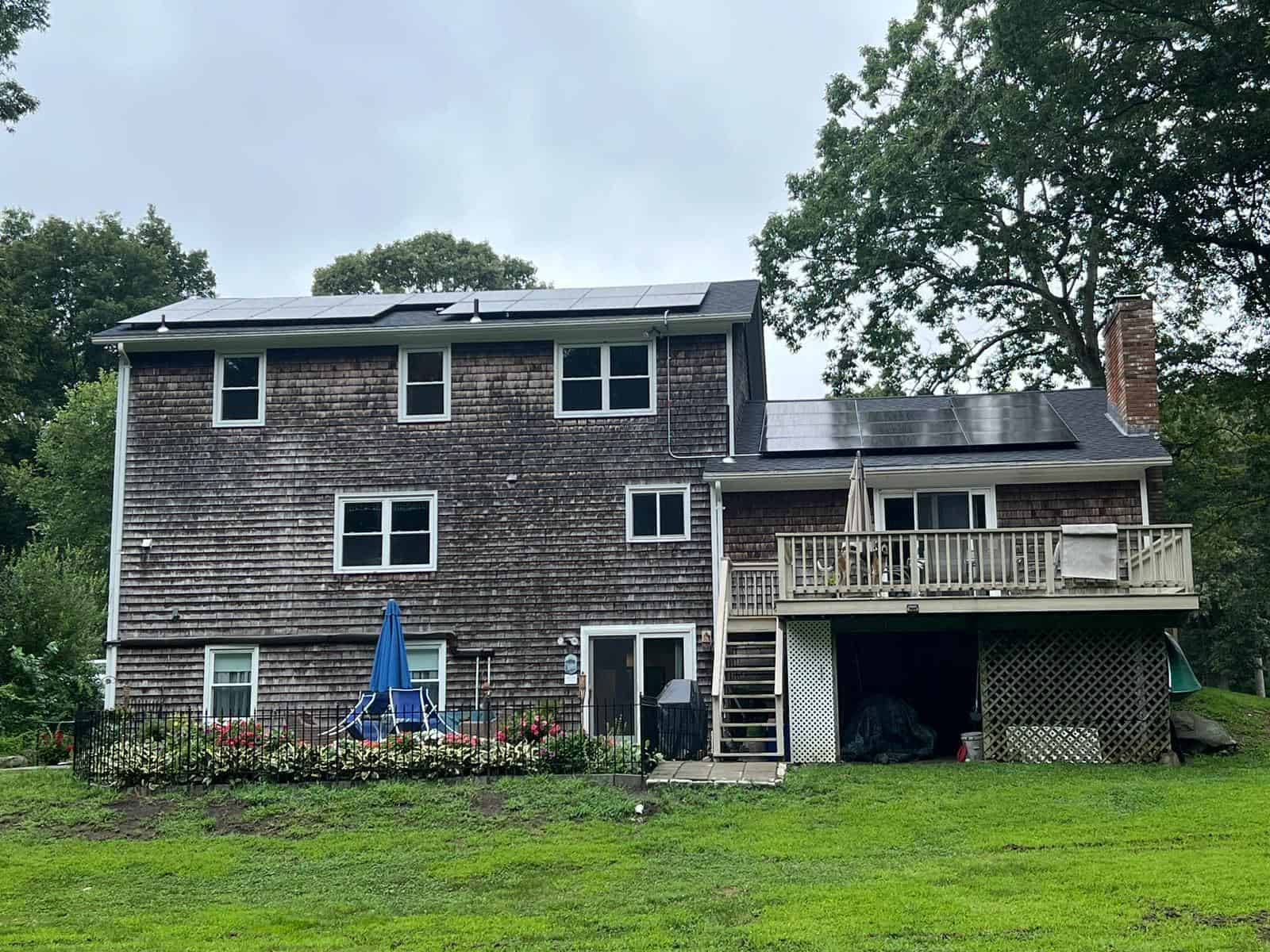
Need a New Roof? Bundle and Save.
Our Roof + Solar Bundle is especially popular in Pawtucket, where many triple-deckers, workers' cottages, and mill housing buildings have older roofs. Get a new roof and solar installed together — it costs less than doing them separately, and your new roof is protected from day one.
Learn About Roof + SolarReady to Install Solar in Pawtucket?
Get a free quote from installers who know Pawtucket's triple-deckers, workers' cottages, and older housing stock inside and out. We handle permits, National Grid, and everything in between.
Get Your Free Quote