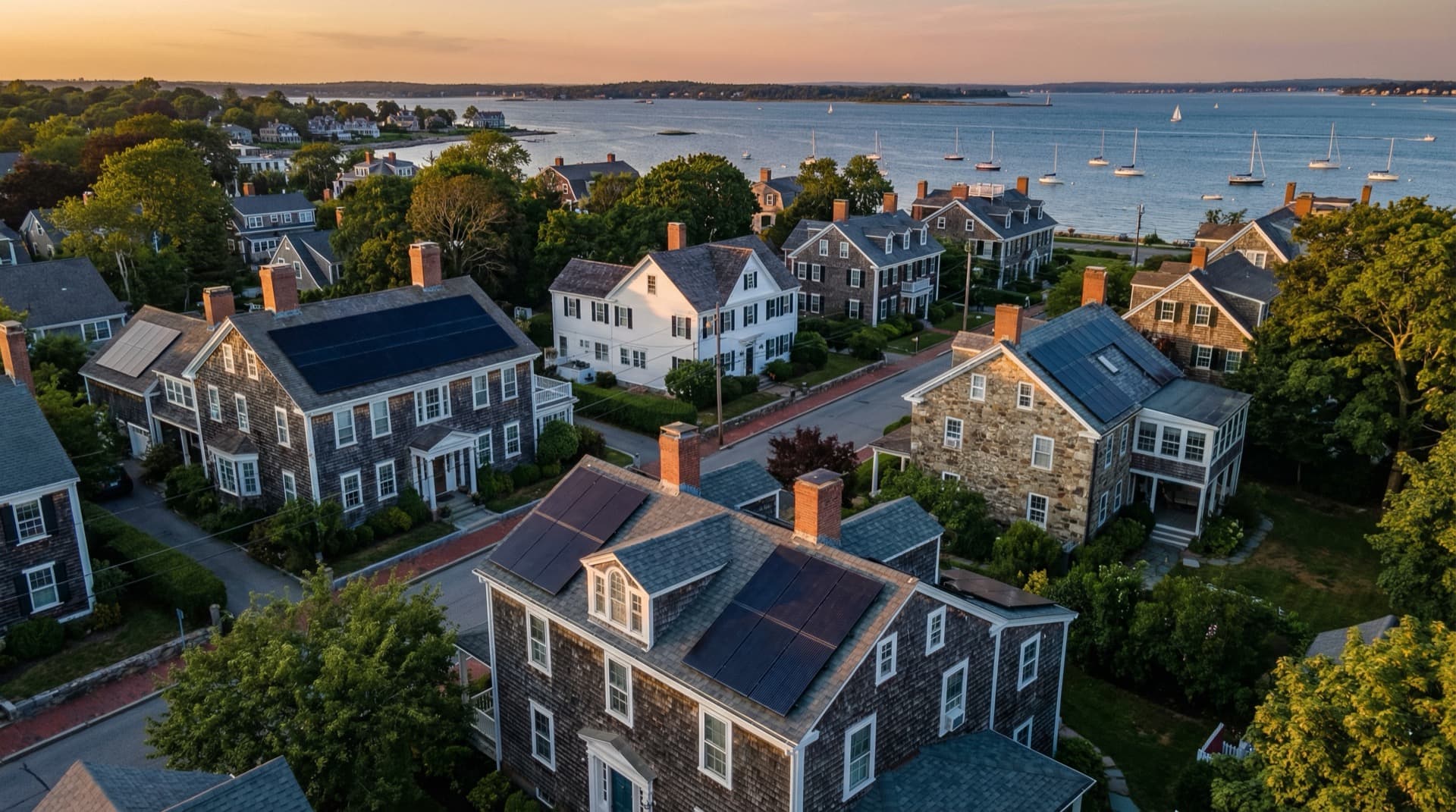
Solar Installation in Rhode Island
From triple-deckers in Providence to hurricane-rated mounts on the coast — here is what Ocean State homeowners need to know before panels go up.
Get Your Free QuoteGoing Solar in the Smallest State With the Biggest Energy Bills
Rhode Island may be the smallest state by area, but it punches well above its weight on solar adoption per capita — and for good reason. National Grid residential rates hover around 27–28 cents per kWh, roughly 65–70% above the national average. When your electricity costs that much, a rooftop solar system stops being a nice-to-have and starts looking like the most obvious financial move you can make. Combine those rates with the REG Program, REF grants, and full 1:1 net metering, and the payback math gets very attractive very fast.
Every solar installation in Rhode Island must be performed by a licensed electrician, and the installing company must be registered through the Contractors Registration Board under the Department of Business Regulation. The state's housing stock ranges from Victorian-era triple-deckers in Providence and Pawtucket to Cape Cod–style ranch homes in Warwick and Cranston, plus a coastline that demands hurricane-rated equipment in exposed areas. Getting solar right here means hiring a crew that understands the local building landscape — not just the panels.
Installation Process
Site Assessment & System Design
A site engineer evaluates your roof orientation, pitch, shading from nearby trees or buildings, and structural capacity. In Rhode Island, this includes checking whether your roof can handle the additional load of panels plus snow — snow loads are lower than western Massachusetts but still relevant, especially on older framing. Coastal properties in Warwick and along Narragansett Bay also get assessed for salt-air exposure and wind uplift requirements.
Permitting & National Grid Application
Your installer files a building permit with your local municipality — Providence, Warwick, Cranston, and Pawtucket each have their own building department and timeline. Simultaneously, an interconnection application goes to National Grid (which serves roughly 97% of Rhode Island residential customers). Most municipalities process residential solar permits within 1 to 3 weeks, though historic districts may take longer.
Roof Prep & Mounting
Racking is secured to your roof structure. On pitched asphalt-shingle roofs — the most common across Cranston, Warwick, and suburban neighborhoods — flashed lag bolts anchor into rafters. Flat roofs on Providence and Pawtucket triple-deckers use ballasted or non-penetrating mounts to protect the membrane. Coastal properties may require corrosion-resistant hardware rated for salt-air environments.
Panel & Inverter Installation
Panels are mounted on the racking, wiring runs to the inverter (string or microinverters), and the system connects to your electrical panel. Most residential installs in Rhode Island take one to two days of on-roof work. Homes near Narragansett Bay may use hurricane-rated mounting hardware that adds a few extra steps but keeps your array secure through coastal storms.
Inspection & Permission to Operate
A municipal electrical inspector verifies the installation meets the Rhode Island State Building Code. Once approved, National Grid performs a final meter swap or installs a bi-directional meter. They then issue Permission to Operate (PTO), and your system goes live — typically 2 to 4 weeks after passing inspection. From contract signing to PTO, expect the full process to take 4 to 10 weeks.
Rhode Island Roof Types — From Triple-Deckers to Coastal Capes
Rhode Island's housing stock tells the story of the state itself. In Providence and Pawtucket, triple-deckers built during the Industrial Revolution line neighborhood streets — these multi-family homes often have flat or low-slope rubber membrane roofs that work well with ballasted racking systems. Victorian, colonial, and workers' cottage roofs with steeper pitches are also common in these cities, and asphalt-shingle versions take standard penetrating mounts without issue. Historic homes on College Hill in Providence or near Slater Mill in Pawtucket may require extra care to preserve architectural details.
Head south to Warwick and Cranston, and the housing shifts to suburban single-family homes — Cape Cods, ranches, split-levels, and colonial revivals with asphalt-shingle pitched roofs that are ideal for solar. These homes tend to have larger, unobstructed roof areas with good southern exposure. The coastal factor matters too: Warwick homes near Greenwich Bay, Conimicut, and Warwick Neck face salt air and higher wind loads, so installers spec corrosion-resistant racking and hurricane-rated mounts designed to withstand Narragansett Bay weather. Snow loads in Rhode Island are moderate — generally lower than inland New England — but structural verification is still required before installation.
Rhode Island Licensing, Permits & Inspections
Solar contractors working on Rhode Island homes must be registered through the Contractors Registration Board, which operates under the Department of Business Regulation. The electrical work must be performed by a Rhode Island–licensed electrician. You can verify any contractor's registration status through the Department of Business Regulation — and you should. Rhode Island's tight-knit communities mean word travels fast, but checking credentials protects you from the occasional bad actor who slips through.
Every solar installation requires a building permit from your local municipality. Providence, Warwick, Cranston, and Pawtucket each run their own building departments, and permit timelines vary — most residential solar permits clear in 1 to 3 weeks, though properties in historic districts may face additional review. After installation, a municipal electrical inspection is required before National Grid will schedule the meter change and issue Permission to Operate. The full timeline from contract signing to system activation typically runs 4 to 10 weeks, depending on your city's permitting pace and National Grid's interconnection queue.
Explore Cities
Frequently Asked Questions
✶Do I need a permit to install solar panels in Rhode Island?+
✶How long does the National Grid interconnection process take?+
✶Can my triple-decker get solar panels?+
✶How do I verify a solar contractor is licensed in Rhode Island?+
✶Do coastal Rhode Island homes need special solar equipment?+
✶What roof types work best for solar in Rhode Island?+

National Grid Rates Keep Climbing in Rhode Island
Rhode Island electricity rates are 65–70% above the national average and still rising. Lock in a lower rate today with solar.
See How Much You Can SaveWhat’s Really on Your National Grid Bill?
57% of your bill is hidden fees and charges!
Delivery Charges
Confusing charges like the "customer charge" and "energy efficiency charge" make up most of the hidden fees on your National Grid bill.
17%
of your bill
Distribution
Covers the poles, wires, and infrastructure that deliver power from the main line to your Rhode Island home.
27%
of your bill
Transmission
What National Grid charges for transporting power from the supply source to local towers and lines.
13%
of your bill
Actual Supply
The electricity you actually use—just 43% of what you pay.
43%
of your bill
Solar Eliminates All These Charges
When you go solar, you no longer rely on the utility company to produce electricity—and no longer have to pay their ridiculous charges. Instead, you produce your own power with a low, locked-in solar rate.
Eliminate Your Electric Bill TodayIs Solar Really Free in Rhode Island?
While you can’t technically get “free” solar panels, they are “free” in the sense that you can expect to pay less for solar than you already do for electricity — and it costs nothing to make the switch.
So you’re swapping out an unpredictable National Grid bill for a price-protected solar payment that is usually about 30–40% lower. While it isn’t exactly “free,” it’s about as close as it gets.
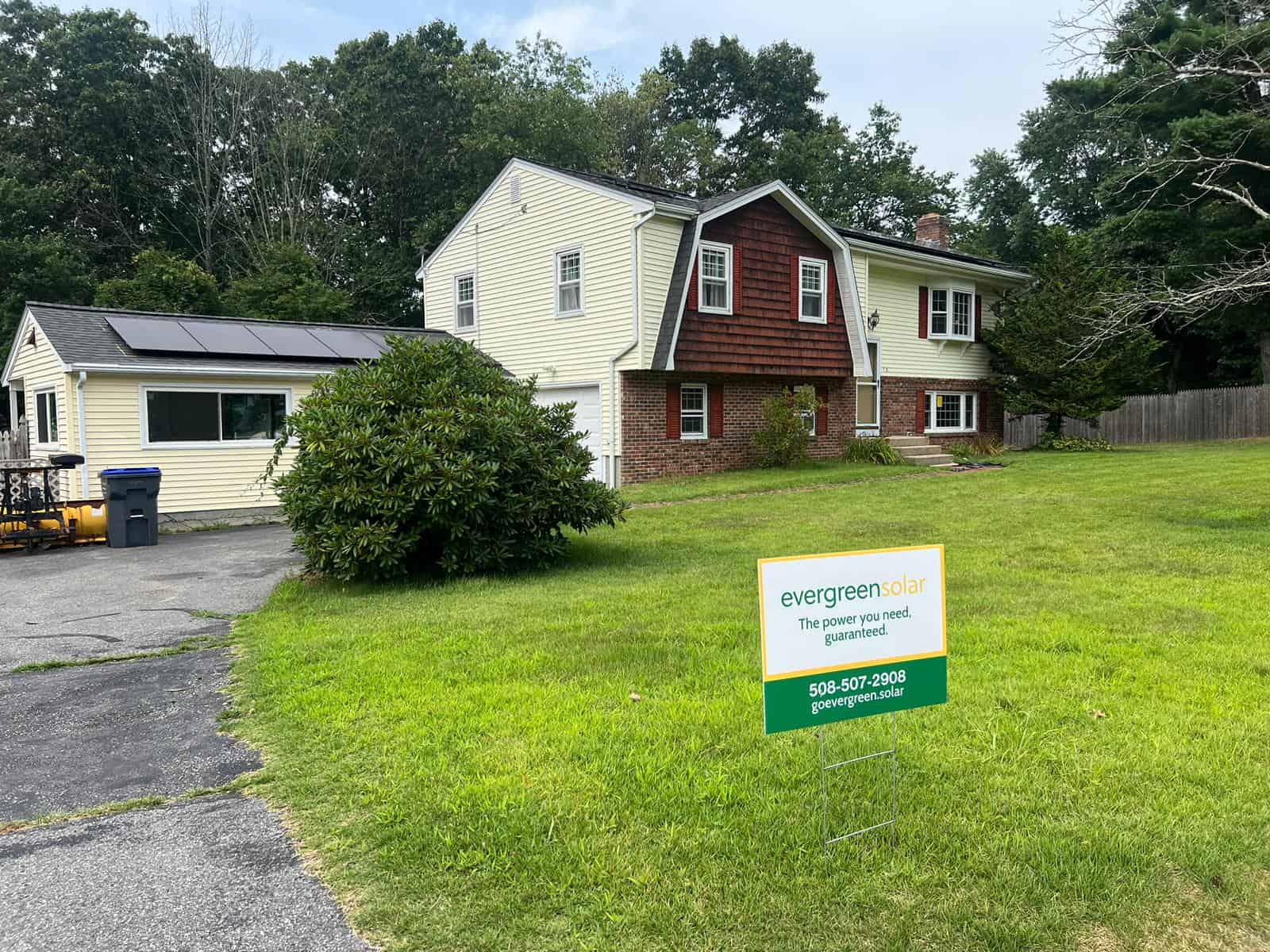
Need a New Roof? Bundle and Save.
Our Roof + Solar Bundle makes it easy for Rhode Island homeowners to get a new roof and solar at the same time. Since the roof is an essential part of the solar project, you save big by bundling — and still pay less than traditional National Grid electricity.
Learn About Roof + SolarReady to Install Solar in Rhode Island?
Get a free quote from licensed Rhode Island installers who know National Grid interconnection, local permitting, and every roof type from triple-deckers to coastal Capes. We handle every step from design to activation.
Get Your Free Quote