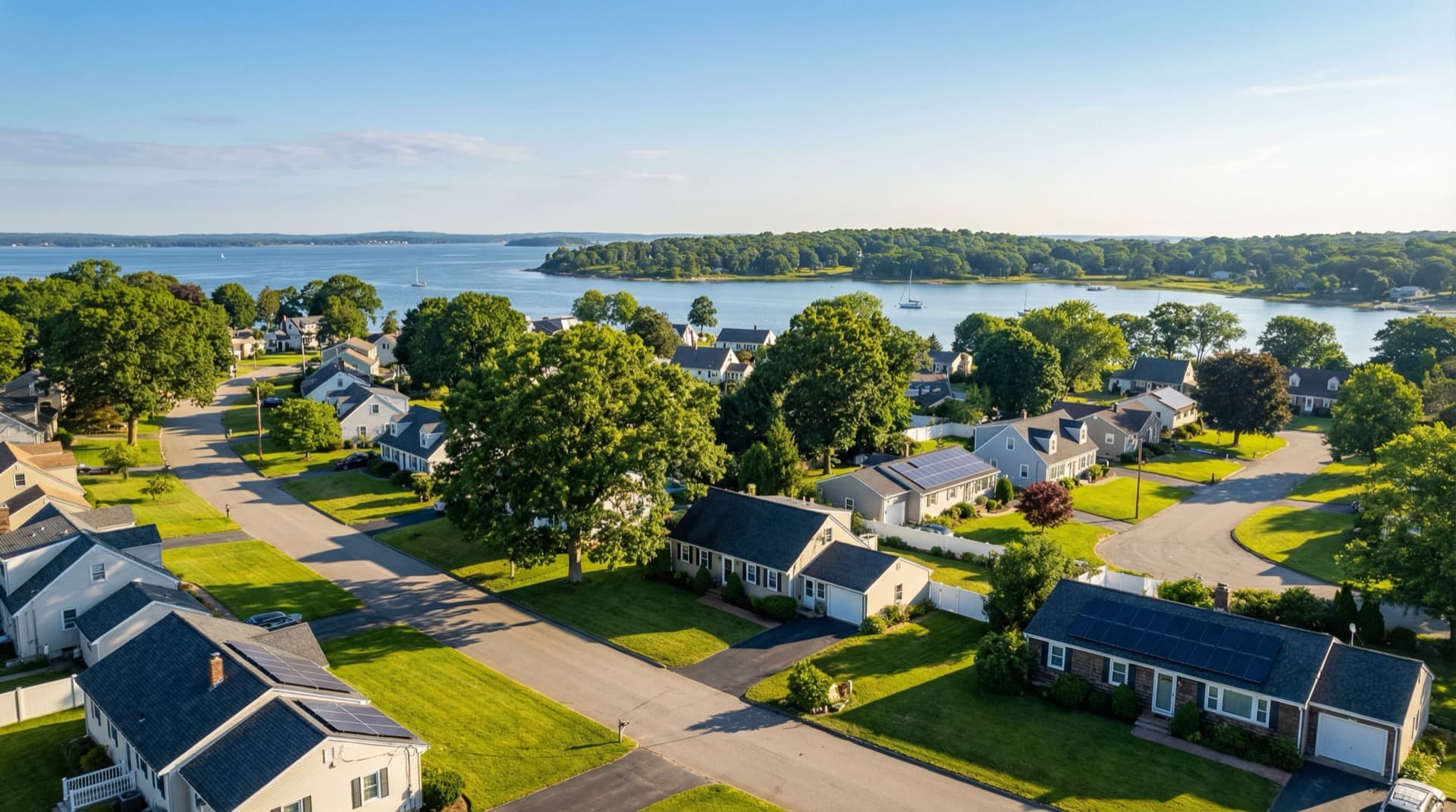
Solar Installation in Warwick
Cape Cods, ranches, salt air, and Narragansett Bay views — Warwick solar installation comes with a coastal twist. Here is how it works.
Get Your Free QuoteWhy Warwick Is Built for Solar — and What Coastal Living Means for Your Install
Warwick sits in a solar sweet spot. The city's suburban layout — miles of Cape Cods, ranches, and split-levels stretching from Apponaug to Cowesett — delivers exactly what solar installers love: wide-open roofs with minimal shading and plenty of south-facing exposure. Fewer tall buildings than Providence, fewer mature canopy trees than western Cranston, and neighborhoods like Conimicut and Warwick Neck that catch sun off the water all day long.
But Warwick is also a coastal city, and Narragansett Bay adds a wrinkle. Salt air accelerates corrosion on standard hardware, and hurricane-season wind loads mean your racking system needs to be rated for it. Experienced installers working in Warwick use marine-grade, corrosion-resistant mounting hardware and hurricane-rated racking as standard — not as an upgrade. With National Grid rates hovering around 27–28 cents per kWh and Rhode Island's 100% renewable by 2033 mandate pushing solar adoption, getting the installation right the first time is what separates a 25-year system from a 10-year headache.
Installation Process
Site Assessment & Coastal Engineering Review
A licensed structural engineer evaluates your roof — whether it is a ranch in Cowesett, a Cape Cod near Apponaug, or a split-level in Buttonwoods. Beyond standard load calculations, the assessment accounts for Warwick's coastal wind exposure and salt-air environment. Shading analysis confirms your roof gets the unobstructed sun that makes Warwick one of the best solar markets in Rhode Island.
City of Warwick Building Permit
Your installer submits building and electrical permit applications to the Warwick Building Department. Standard residential solar permits typically take 2 to 5 weeks. Warwick has adopted streamlined solar permitting that keeps the process straightforward for residential systems. Coastal properties near Warwick Neck, Conimicut, or Oakland Beach may require documentation confirming hurricane-rated equipment.
National Grid Interconnection Application
While city permits process, your installer files an interconnection application with National Grid. For residential systems under 25 kW, National Grid typically responds within 15 to 30 business days. This runs in parallel with the permit process so your overall timeline stays tight.
Installation Day
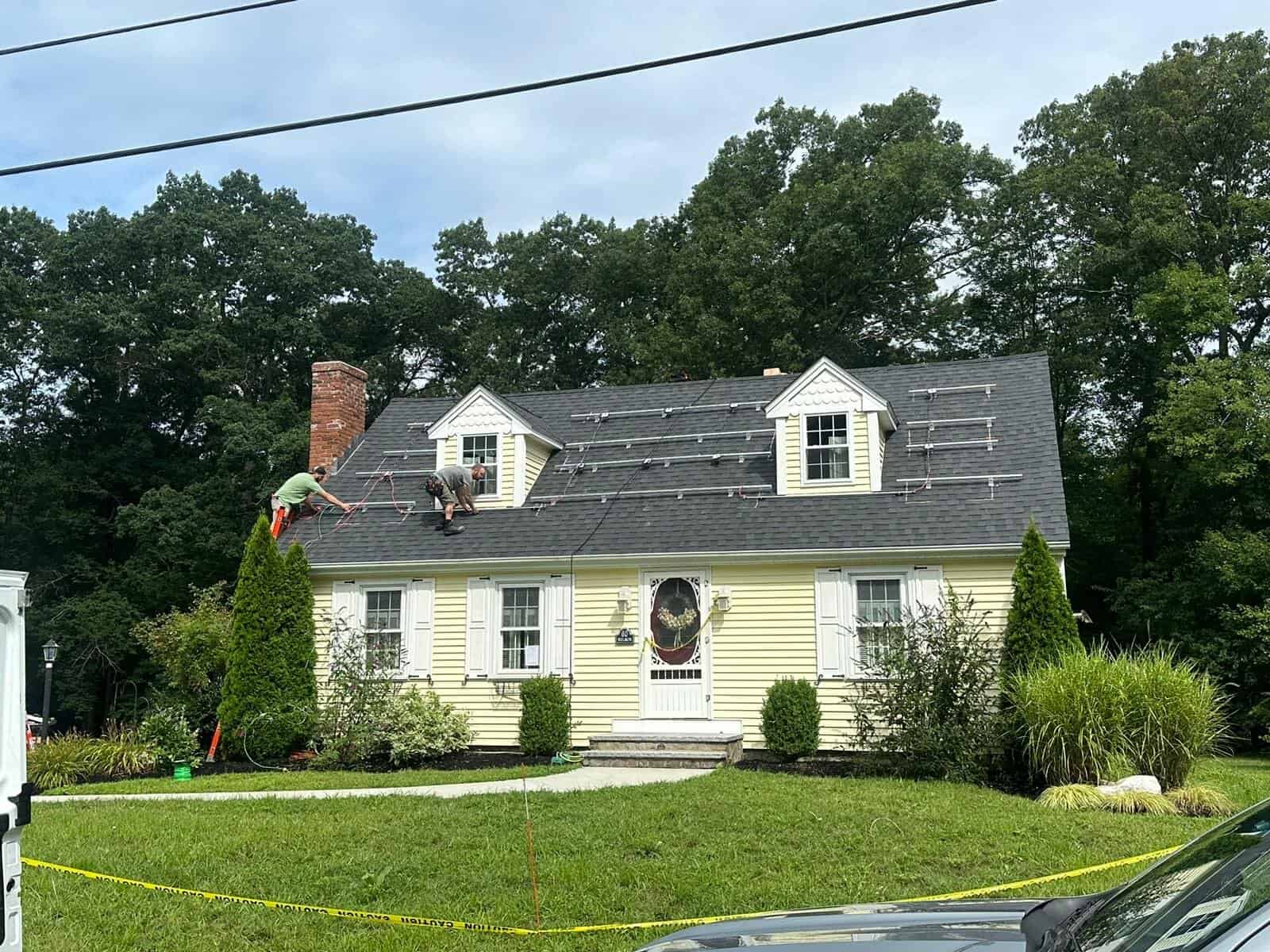
A crew of 3 to 5 licensed electricians arrives and mounts your system — typically in one day for Warwick's pitched-roof homes. Standard rail mounts are lag-bolted into rafters with proper flashing on asphalt-shingle Cape Cods and ranches. Every bracket, bolt, and rail is marine-grade and corrosion-resistant, rated for coastal wind loads along Narragansett Bay. Most Warwick installations wrap up in a single day of on-roof work.
Inspection & Permission to Operate
A city electrical inspector verifies code compliance. Once passed, National Grid schedules a bi-directional meter swap and issues Permission to Operate — typically 2 to 4 weeks after inspection. Then your system goes live: generating clean energy, earning REG Program payments, and slashing your National Grid bill.
Warwick Permits: Streamlined Solar with Coastal Considerations
All Warwick solar installations require a building permit and an electrical permit from the city's Building Department. Warwick has adopted streamlined solar permitting guidelines, making the residential process relatively fast — typically 2 to 5 weeks. Your installer submits structural calculations, electrical diagrams, and a site plan, and the city handles the review. No historic district overlay complicates things the way it can in Providence.
For properties in coastal zones — particularly along Warwick Neck, Conimicut, Oakland Beach, and the Greenwich Bay waterfront — your installer may need to document that all mounting hardware meets coastal wind ratings and corrosion-resistance standards. This is not an additional permit, but the building department may request confirmation as part of the standard review. Experienced Warwick installers include this documentation automatically.
Warwick Roof Types: Cape Cods, Ranches, and Coastal Durability
Warwick's housing stock is a solar installer's dream. Cape Cod and ranch-style homes dominate neighborhoods from Cowesett to Apponaug — both feature simple, pitched rooflines with large, uninterrupted south-facing surfaces. Split-levels in Buttonwoods and suburban single-family homes throughout the city offer similar advantages. Standard rail mounts are lag-bolted into rafters with flashed brackets on asphalt-shingle roofs. The wide, open lots typical of Warwick mean fewer shading issues from neighboring structures.
The coastal factor is where Warwick diverges from inland cities like Cranston. Homes near Narragansett Bay, Greenwich Bay, and Warwick Neck are exposed to salt air that corrodes standard galvanized steel hardware over time. Reputable installers use marine-grade aluminum racking, stainless steel fasteners, and corrosion-resistant microinverters or optimizers. Hurricane-rated mounting systems are standard for coastal Warwick — designed to withstand sustained winds well beyond typical New England nor'easters. Your structural assessment confirms the framing handles panels plus Rhode Island's wind and snow loads.
What to Expect on Installation Day in Warwick
Most Warwick installations are completed in a single day. A crew arrives in the morning, sets up safety equipment, and begins mounting racking on your roof. Warwick's suburban streets — wider than Providence or Pawtucket's dense urban neighborhoods — make logistics easier. The work truck parks in your driveway or on the street without blocking traffic. Panels go up through the afternoon, wiring runs to the inverter, and the system is connected to your electrical panel by end of day.
After installation, your system sits idle until it passes city inspection and National Grid issues Permission to Operate, typically 2 to 4 weeks later. You do not need to be home for the entire installation — just available for the start and any final walkthrough. Once PTO arrives, your panels start generating clean energy, earning REG Program payments, and banking net metering credits on your National Grid account. Whether you are in Cowesett watching the sunset over Greenwich Bay or picking up coffee in Apponaug, your roof is working for you.
Frequently Asked Questions
✶Does salt air from Narragansett Bay damage solar panels in Warwick?+
✶How long does the solar permit process take in Warwick?+
✶Are Warwick solar installations rated for hurricanes?+
✶How long does National Grid interconnection take in Warwick?+
✶What size solar system fits a typical Warwick home?+

Warwick National Grid Bills Keep Climbing
National Grid rates in Warwick have climbed dramatically — and there is no sign of relief. Lock in a lower rate today with solar.
See How Much You Can SaveWhat's Really on Your National Grid Bill?
57% of your bill is hidden fees and charges!
Delivery Charges
Customer charges, energy efficiency surcharges, and renewable energy charges make up the hidden fees on your National Grid bill.
17%
of your bill
Distribution
Covers the poles, wires, and infrastructure delivering power to your Warwick home.
27%
of your bill
Transmission
What National Grid charges for transporting power from generation sources to local distribution lines in Rhode Island.
13%
of your bill
Actual Supply
The electricity you actually use—just 43% of what you pay.
43%
of your bill
Solar Eliminates All These Charges
When you go solar, you no longer rely on the utility company to produce electricity—and no longer have to pay their ridiculous charges. Instead, you produce your own power with a low, locked-in solar rate.
Eliminate Your Electric Bill TodayIs Solar Really Free in Warwick?
While you can't technically get "free" solar panels, they are "free" in the sense that you can expect to pay less for solar than you already do for National Grid electricity — and it costs nothing to make the switch.
You're swapping out an unpredictable and constantly increasing National Grid bill for a price-protected solar payment that is usually about 40% lower. The REG Program income is an additional revenue stream on top of the savings.
Need a New Roof? Bundle and Save.
Our Roof + Solar Bundle makes it easy for Warwick homeowners to get a new roof and solar at the same time. Coastal homes especially benefit from updated roofing with salt-air-resistant materials before panels go on — protecting both your roof and your solar investment for decades.
Learn About Roof + SolarReady to Install Solar in Warwick?
Get a free quote from installers who know Warwick's coastal requirements, city permits, and National Grid inside and out. From Cowesett to Conimicut, we handle it all.
Get Your Free Quote