How Much Does Solar Cost in Rhode Island?
National Grid rates keep climbing, but the cost of going solar keeps dropping. Here's what you'll actually pay — and what you'll save.
See Your PriceSolar Pricing in the Ocean State: The Real Numbers
Rhode Island homeowners pay an average of $3.00 to $3.40 per watt for a residential solar system before incentives. A typical 7–9 kW system runs about $21,000–$30,600 before the math starts working in your favor. And in a state where National Grid charges 27–28 cents per kWh — roughly 65–70% above the national average — that math works fast. Every kilowatt-hour your panels produce offsets some of the most expensive electricity in the country.
Between the REG Program's guaranteed per-kWh payments, Renewable Energy Fund grants from the Rhode Island Infrastructure Bank, full 1:1 net metering credits, and both property and sales tax exemptions, the net cost of going solar in the Ocean State drops dramatically. Most homeowners can go solar for $0 upfront with a lease or PPA that costs less per month than their current National Grid bill — and Rhode Island's 100% renewable by 2033 mandate under the Act on Climate means the policy tailwinds aren't slowing down.
How Rhode Island Incentives Slash Your Solar Bill
The federal residential solar tax credit (Section 25D) expired on December 31, 2025 — Rhode Island homeowners can no longer claim it on their tax returns. But the savings didn't vanish. Through solar leases and PPAs, providers apply the commercial Section 48 Investment Tax Credit to lower your monthly payment automatically. No tax paperwork, no refund to wait for — the federal savings are built right into your plan from day one.
On top of that, Rhode Island stacks incentives like few other states. The REG Program pays you a fixed rate per kWh generated for 15–20 years — a guaranteed revenue stream administered by National Grid. The Renewable Energy Fund through the RI Infrastructure Bank offers grants of $0.85–$1.00 per watt (that's up to $7,000 on a 7kW system). Add in full 1:1 net metering credits at 27–28 cents per kWh, a 100% property tax exemption, and the 7% sales tax exemption on solar equipment, and Rhode Island's combined incentive package can cover 50–65% of the total system cost.
Solar System Costs by Size
| System Size | Gross Cost | Federal Credit | State Incentive | Net Cost |
|---|---|---|---|---|
| 5kW | $16,000 | $4,800 | $4,500 | $6,700 |
| 7kW | $22,400 | $6,720 | $6,300 | $9,380 |
| 10kW | $32,000 | $9,600 | $9,000 | $13,400 |
Paying for Solar in Rhode Island: Your Options
Most Rhode Island homeowners go solar with a $0-down lease or power purchase agreement (PPA). You pay a fixed monthly rate that's typically 30–40% less than your current National Grid bill, skip the upfront cost entirely, and the provider handles maintenance. The federal tax credit savings and REG Program benefits are baked right into your rate — you just enjoy lower payments while National Grid keeps raising theirs.
If you prefer ownership, the Rhode Island Infrastructure Bank offers Green Loans with favorable terms designed specifically for solar and clean energy projects. These low-interest loans beat most standard home improvement financing. Buying outright or financing with a Green Loan maximizes your long-term return — a paid-off system generates free electricity for its 25–30 year lifespan — but the $0-down lease route gets more Ocean State homeowners saving from month one without financial risk.
Rhode Island Solar Pays for Itself in 6–8 Years
The average payback period for a purchased solar system in Rhode Island is 6 to 8 years — well below the national average of 8 to 12 years. The reason is straightforward: when National Grid charges 27–28 cents per kWh, every kilowatt-hour your panels produce saves you significantly more than it would in a state with average electricity costs. Stack on the REG Program's guaranteed per-kWh payments and REF grants from the RI Infrastructure Bank, and the break-even point comes fast. After that, you're generating free electricity for another 17–24 years.
For homeowners on a lease or PPA, the payback concept is even simpler — you save from day one. Your fixed solar payment is lower than what National Grid was charging, so there's no break-even point to wait for. Over a 25-year lease term, cumulative savings for a typical Rhode Island home add up to $25,000 to $45,000, depending on how aggressively National Grid continues raising rates.
Explore Cities
Frequently Asked Questions
✶How much do solar panels cost in Rhode Island in 2026?+
✶What is the payback period for solar in Rhode Island?+
✶Can I go solar in Rhode Island with no money down?+
✶How do REG Program payments reduce my solar cost?+
✶What financing options are available for solar in Rhode Island?+
✶Is the federal solar tax credit still available in Rhode Island?+

National Grid Rates Hit New Highs in Rhode Island
At 27–28 cents per kWh, Rhode Island's National Grid rates are 65–70% above the national average — and they keep climbing. Lock in a lower rate with solar before the next increase.
See How Much You Can SaveWhat's Really on Your National Grid Bill?
57% of your bill is hidden fees and charges!
Delivery Charges
National Grid's delivery charges — including the customer charge and energy efficiency surcharge — make up a significant chunk of your bill beyond the supply rate.
17%
of your bill
Distribution
The cost of maintaining the poles, wires, and infrastructure that deliver power from the main lines to your Rhode Island home.
27%
of your bill
Transmission
What National Grid charges for moving electricity from power plants to local distribution networks across Rhode Island.
13%
of your bill
Actual Supply
The electricity you actually use—just 43% of what you pay.
43%
of your bill
Solar Eliminates All These Charges
When you go solar, you no longer rely on the utility company to produce electricity—and no longer have to pay their ridiculous charges. Instead, you produce your own power with a low, locked-in solar rate.
Eliminate Your Electric Bill TodayIs Solar Really Free in Rhode Island?
Technically, no — but most Rhode Island homeowners pay less for solar than they currently pay National Grid for electricity. And switching costs nothing upfront.
You're replacing an unpredictable National Grid bill that averages 27–28 cents per kWh with a fixed solar payment that's typically 30–40% lower. Add in REG Program payments and full 1:1 net metering credits, and it's about as close to free as energy gets in the Ocean State.
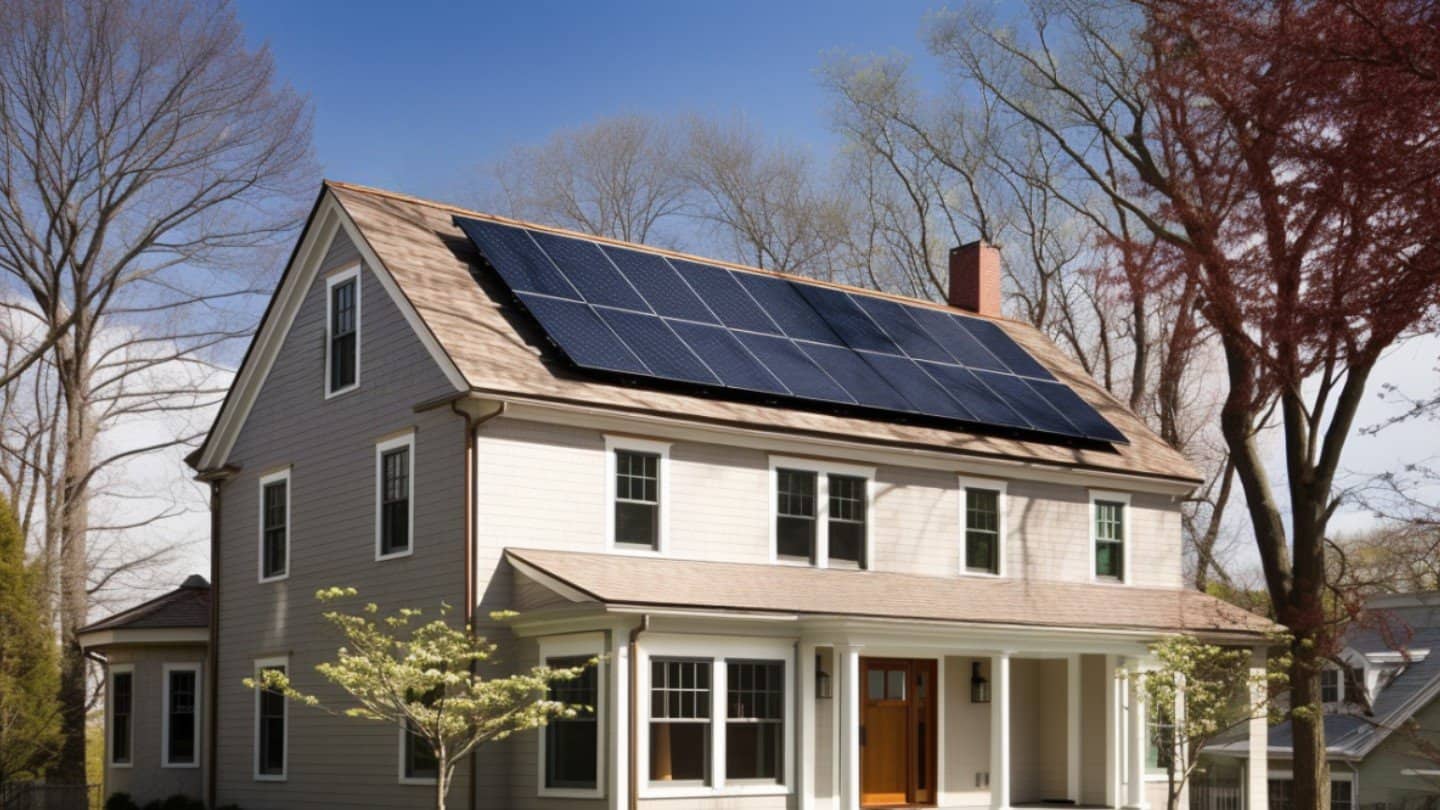
Need a New Roof? Bundle and Save.
Our Roof + Solar Bundle lets Rhode Island homeowners get a new roof and solar panels installed together. Since the roof is part of the solar project, you save by bundling — and your total monthly payment is still less than what National Grid charges for electricity alone.
Learn About Roof + SolarSee What Solar Costs for Your Rhode Island Home
Get a free, personalized solar quote based on your roof, energy usage, and Rhode Island's full incentive stack — REG Program, REF grants, net metering, and tax exemptions included. No obligation, no pressure.
Get Your Free Quote