Finding a Solar Company You Can Actually Trust in Rhode Island
Rhode Island is small enough that word travels fast — especially when a solar company does bad work. Here is how to find the good ones and avoid the rest.
Get a Free QuoteA Small State With a Tight-Knit Solar Market
Rhode Island may be the smallest state in the country, but its solar market is surprisingly active. The combination of National Grid rates hovering around 27–28 cents per kWh, the Renewable Energy Growth (REG) Program, and the state's aggressive 100% renewable electricity mandate by 2033 has attracted a steady stream of solar companies looking to serve Ocean State homeowners.
The good news about a small state: bad actors get found out quickly. In a place where everyone knows someone who knows someone, a company that cuts corners on a triple-decker in Pawtucket will hear about it on Federal Hill by dinnertime. But you still need to do your homework — not every company knocking on doors in Providence or setting up at the Warwick Home Show has the local knowledge to get your installation right. The RI Attorney General's consumer protection division has handled complaints about misleading sales tactics and unclear contract terms, and the Division of Public Utilities and Carriers (DPUC) keeps an eye on the industry from the regulatory side.
How to Verify a Solar Company in Rhode Island
Every solar installer working in Rhode Island must be registered through the RI Contractors Registration Board, which operates under the Department of Business Regulation. This is not optional — it is state law. You can verify any contractor's registration status through the Department of Business Regulation's online lookup. Additionally, Rhode Island requires a licensed electrician for solar installations, so confirm that the company has qualified electrical staff or a licensed subcontractor on every job. If a company cannot provide their registration number, that tells you everything you need to know.
Beyond licensing, ask about experience specifically in Rhode Island. National Grid serves roughly 97% of residential customers in this state, so any legitimate installer should know the National Grid interconnection process inside and out. Ask how many systems they have connected to National Grid, whether they have experience with the REG Program enrollment process, and how they handle local building permits in your city. A company that just started operating in Rhode Island last quarter will not have the same depth of knowledge as one that has been doing installations here for years.
Red Flags That Should Send You Running
The RI Attorney General's consumer protection division has fielded complaints about solar companies, and the patterns are familiar. Watch out for any company that pressures you to sign today with a "limited-time offer" — the REG Program and state incentives do not expire overnight. Be wary of salespeople who promise specific dollar savings without reviewing your National Grid bill or assessing your roof. If someone tells you the "federal tax credit" will let you deduct thousands from your taxes, they are either uninformed or misleading you — the residential 25D credit expired at the end of 2025. The savings now come through lower lease and PPA rates, not a personal tax refund.
Other warning signs include companies that cannot explain how 1:1 net metering works with National Grid, those that ask for large deposits before any work begins, and installers who cannot describe the difference between the REG Program and the Renewable Energy Fund. If they do not know RI's incentive landscape, they are not ready to be on your roof. For complaints, contact the RI Attorney General's consumer protection division or the Division of Public Utilities and Carriers (DPUC) — in a state this small, regulators actually pay attention.
Explore Cities
Frequently Asked Questions
✶How do I verify a solar company is licensed in Rhode Island?+
✶What should I do if a solar salesperson uses high-pressure tactics?+
✶Should I choose a local Rhode Island solar company or a national chain?+
✶How many solar quotes should I get before deciding?+
✶What questions should I ask a Rhode Island solar company before signing?+
✶Where do I file a complaint about a solar company in Rhode Island?+

Your National Grid Bill Is Only Going Up
Rhode Island electricity rates are among the highest in the nation at 27–28 cents per kWh — roughly 65% above the national average. Lock in a lower rate today with solar.
See How Much You Can SaveWhat’s Really on Your National Grid Bill?
57% of your bill is hidden fees and charges!
Delivery Charges
Confusing line items like the "customer charge" and "energy efficiency charge" make up most of the hidden fees on your National Grid statement.
17%
of your bill
Distribution
Supports and maintains the poles, wires, and infrastructure that delivers power from the main line to your Rhode Island home.
27%
of your bill
Transmission
What National Grid charges you for transporting power from the supply source to local towers and distribution lines.
13%
of your bill
Actual Supply
The electricity you actually use—just 43% of what you pay.
43%
of your bill
Solar Eliminates All These Charges
When you go solar, you no longer rely on the utility company to produce electricity—and no longer have to pay their ridiculous charges. Instead, you produce your own power with a low, locked-in solar rate.
Eliminate Your Electric Bill TodayIs Solar Really Free in Rhode Island?
While you can’t technically get “free” solar panels anywhere, they are “free” in the sense that you can expect to pay less for solar than you already do for electricity — and it costs nothing to make the switch.
So you’re swapping out an unpredictable and constantly increasing National Grid bill for a price-protected solar payment that is usually about 30–40% lower. While it isn’t exactly “free”, it’s about as close as it gets.
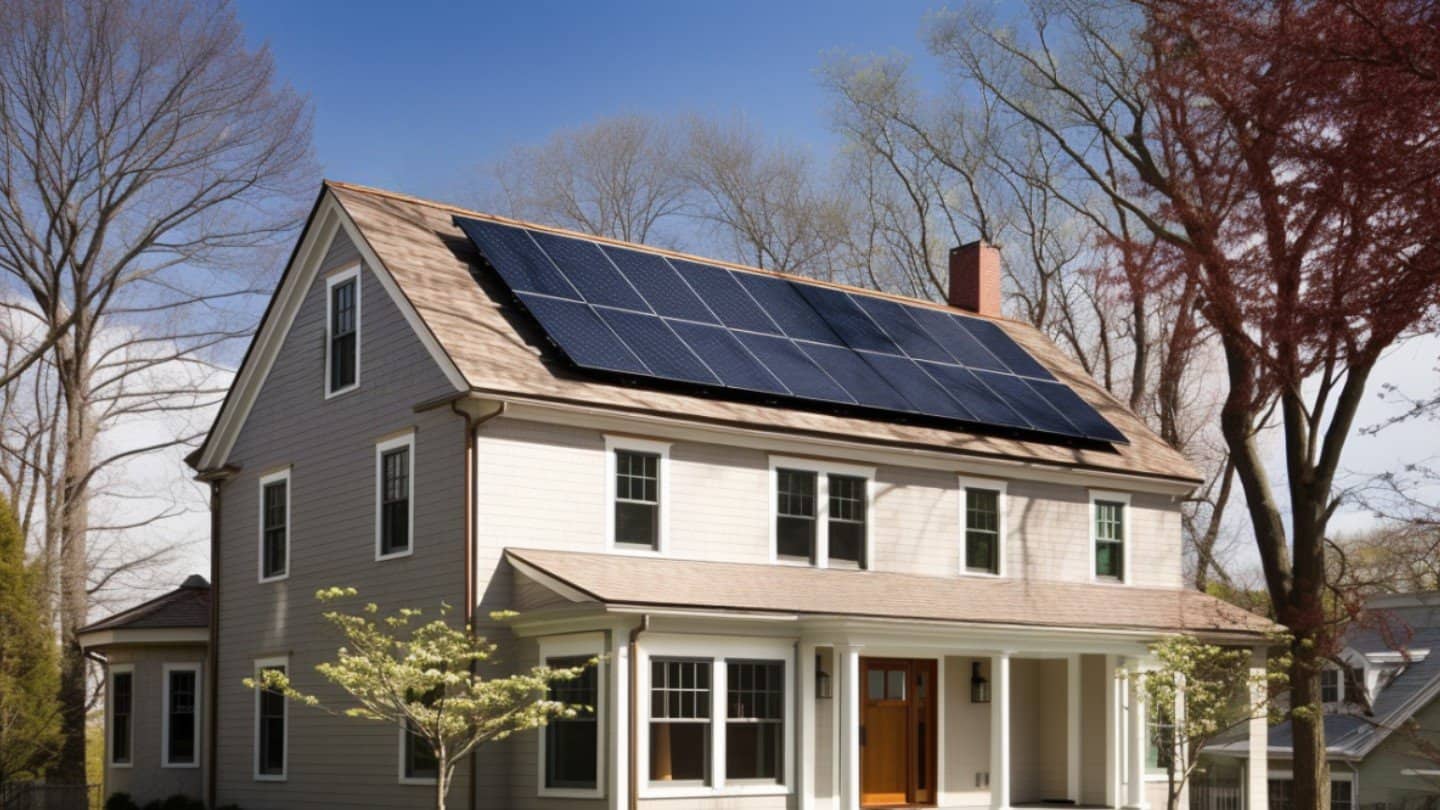
Need a New Roof? Bundle and Save.
Our Roof + Solar Bundle makes it easy for Rhode Island homeowners to get a new roof and solar at the same time. Since it’s an essential part of the solar project, you save big by bundling — and still pay less than traditional electricity from National Grid.
Learn About Roof + SolarReady to Work with a Solar Company You Can Trust?
Get a free, no-pressure quote from Evergreen Solar. We know National Grid inside and out, we use American-made QCell panels, and we never send door-to-door salespeople. See what honest solar looks like in Rhode Island.
Get Your Free Quote