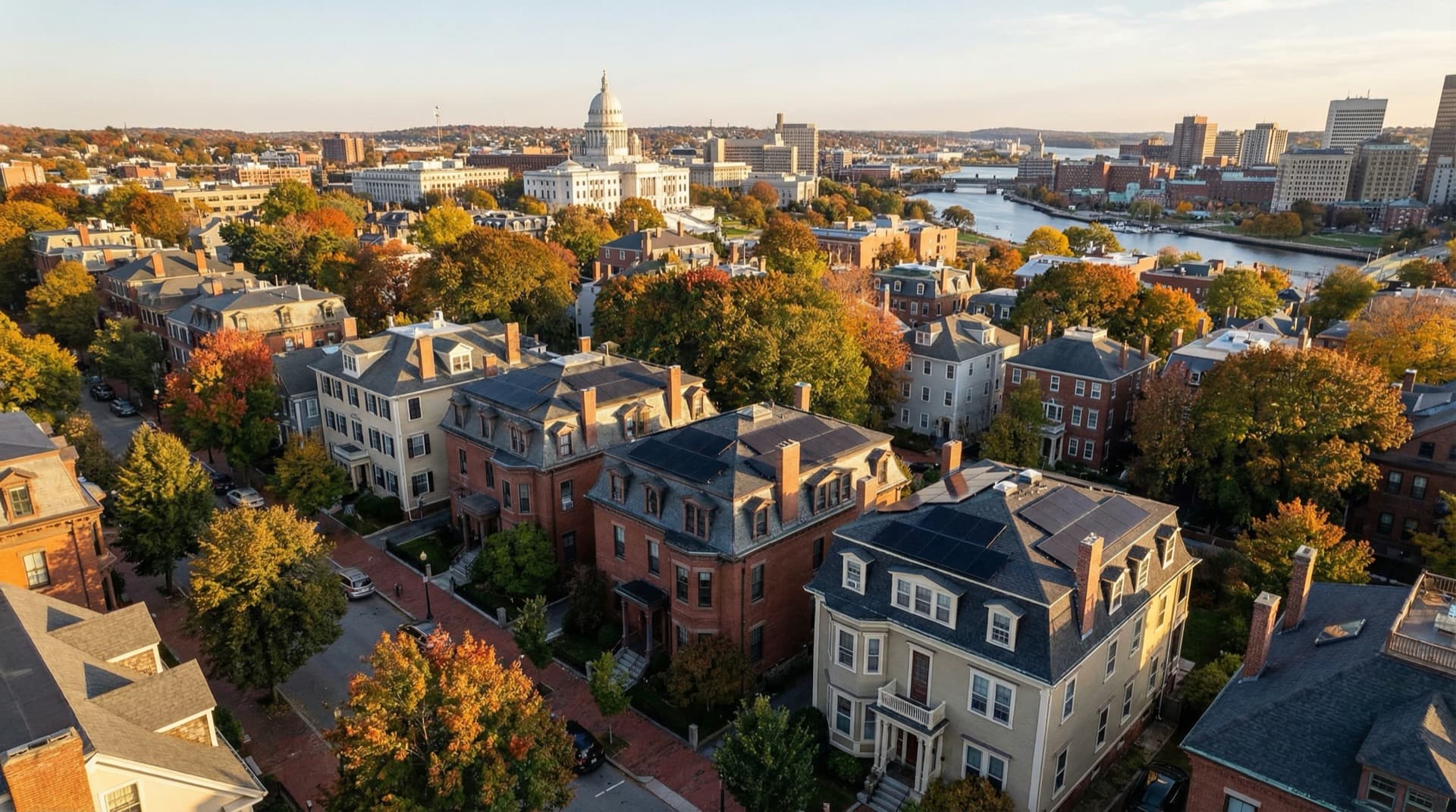
Solar Installation in Providence
Triple-deckers, Victorians, historic districts — Providence solar installation has its own playbook. Here is how it actually works.
Get Your Free QuoteWhy Installing Solar in Providence Takes Local Know-How
Providence is not a cookie-cutter solar market. The capital city packs a wildly diverse housing stock into a compact urban grid — from the triple-deckers that line Elmhurst and Mount Pleasant to the historic Victorians and colonials on College Hill and the East Side. Add in the Providence Historic District Commission, the city building department on Dorrance Street, and National Grid's interconnection process, and you need an installer who knows how to navigate it all without breaking a sweat.
The good news: Providence has been a solar hotspot for years, driven by National Grid rates hovering around 27–28 cents per kWh and Rhode Island's aggressive 100% renewable by 2033 mandate. Experienced local crews know how to mount ballasted racking on flat triple-decker roofs without a single penetration, handle the Providence permitting process efficiently, and get National Grid to issue Permission to Operate on schedule. From Fox Point to Smith Hill, panels are going up on every kind of roof this city has.
Installation Process
Site Assessment & Structural Engineering
A licensed engineer evaluates your roof — whether it is a flat rubber membrane on a Mount Pleasant triple-decker, a pitched slate roof on a College Hill Victorian, or an asphalt-shingle colonial in Elmhurst. They confirm the structure can support panels plus Rhode Island's snow and wind loads, and assess any shading from neighboring buildings or mature trees.
City of Providence Building Permit
Your installer submits building and electrical permit applications to the Providence Department of Inspection and Standards. Standard residential solar permits take 3 to 6 weeks. If your property falls within a local historic district — parts of College Hill, Benefit Street, and the East Side — you may also need review from the Historic District Commission before permits can be issued.
National Grid Interconnection Application
While the city permit is processing, your installer files an interconnection application with National Grid. For standard residential systems under 25 kW, National Grid typically responds within 15 to 30 business days. This runs in parallel with the permit process to keep the overall timeline tight.
Installation Day
On pitched roofs, a crew of 3 to 5 installers mounts flashed rail brackets into rafters and secures panels — usually completed in one day. For Providence's many flat-roofed triple-deckers, the team uses ballasted racking that sits on top of the EPDM membrane with zero penetrations, protecting your waterproofing. Most Providence installations wrap up in 1 to 2 days of on-roof work.
Inspection & Permission to Operate
A city electrical inspector verifies code compliance. Once passed, National Grid schedules a bi-directional meter swap and issues Permission to Operate. From inspection to PTO is typically 2 to 4 weeks. Then your system is generating credits on your National Grid bill — and your REG Program payments start flowing.
Providence Permits: City Building Department & Historic Review
All Providence solar installations require a building permit and an electrical permit from the city's Department of Inspection and Standards. Standard residential solar permits typically take 3 to 6 weeks. Your installer submits structural calculations, electrical diagrams, and a site plan — and the city handles the review. Providence has adopted streamlined solar permitting guidelines, making the process faster than it was even a few years ago.
If your home is in one of Providence's local historic districts — including parts of College Hill, Benefit Street, Broadway, and the Armory District — you may need approval from the Historic District Commission before the building permit is issued. The commission reviews panel placement to ensure it respects the historic character of the neighborhood. Rear-facing and low-visibility installations generally sail through. Outside of historic zones, the process is straightforward and your installer handles all the paperwork.
Providence Roof Types: Triple-Deckers to College Hill Victorians
The triple-decker is Providence's signature housing type — and it is a surprisingly excellent solar candidate. Those flat or low-slope rubber (EPDM) roofs on the top floor offer large, unshaded areas perfect for panels. Installers use ballasted racking systems that sit in weighted trays on the membrane with zero penetrations, keeping your waterproofing completely intact. You will find triple-deckers packed across Elmhurst, Mount Pleasant, Federal Hill, and Smith Hill — and they are among the fastest installs in the city.
On College Hill and the East Side, the housing stock shifts to pitched-roof Victorians, colonials, and historic homes. Standard rail mounts are lag-bolted into rafters with proper flashing on asphalt-shingle roofs. Slate roofs — common on the grander Benefit Street homes — require specialized hook-style brackets that slide under existing tiles without cracking them. No matter what neighborhood you are in, a structural assessment confirms the framing can handle panels plus Rhode Island's wind and snow loads before any work begins.
What to Expect on Installation Day in Providence
Most Providence installations are completed in one to two days. A crew arrives in the morning, sets up safety gear, and starts mounting racking. On Providence's tighter urban streets — think Federal Hill, Fox Point, or the South Side — expect a work truck parked on the street. Your installer will coordinate any necessary parking logistics so the job runs smoothly. Panels go up in the afternoon, wiring runs to the inverter, and the system is connected to your electrical panel by end of day.
For triple-decker installations, the crew works from the top-floor roof, so lower-floor tenants see minimal disruption. If your building has a flat rubber roof, the crew places ballasted racking on the membrane — no drilling, no hammering, no penetrations into your waterproofing. After installation, your system sits idle until it passes city inspection and National Grid issues Permission to Operate, typically 2 to 4 weeks later. Then you are officially generating clean energy and slashing your National Grid bill.
Frequently Asked Questions
✶How long does the solar permit process take in Providence?+
✶Can I install solar on a Providence triple-decker?+
✶Do I need historic district approval for solar in Providence?+
✶How long does National Grid interconnection take in Providence?+
✶What happens to my solar panels during a Providence winter?+

Providence National Grid Bills Keep Climbing
National Grid rates in Rhode Island have jumped significantly over the past 5 years. Lock in a lower rate today with solar.
See How Much You Can SaveWhat's Really on Your National Grid Bill?
57% of your bill is hidden fees and charges!
Delivery Charges
Customer charges, energy efficiency surcharges, and renewable energy charges make up the hidden fees on your National Grid bill.
17%
of your bill
Distribution
Covers the poles, wires, and infrastructure delivering power to your Providence home.
27%
of your bill
Transmission
What National Grid charges for transporting power from the supply source to local lines in Rhode Island.
13%
of your bill
Actual Supply
The electricity you actually use—just 43% of what you pay.
43%
of your bill
Solar Eliminates All These Charges
When you go solar, you no longer rely on the utility company to produce electricity—and no longer have to pay their ridiculous charges. Instead, you produce your own power with a low, locked-in solar rate.
Eliminate Your Electric Bill TodayIs Solar Really Free in Providence?
While you can't technically get "free" solar panels, they are "free" in the sense that you can expect to pay less for solar than you already do for National Grid electricity — and it costs nothing to make the switch.
You're swapping out an unpredictable and constantly increasing National Grid bill for a price-protected solar payment that is usually about 30–40% lower.
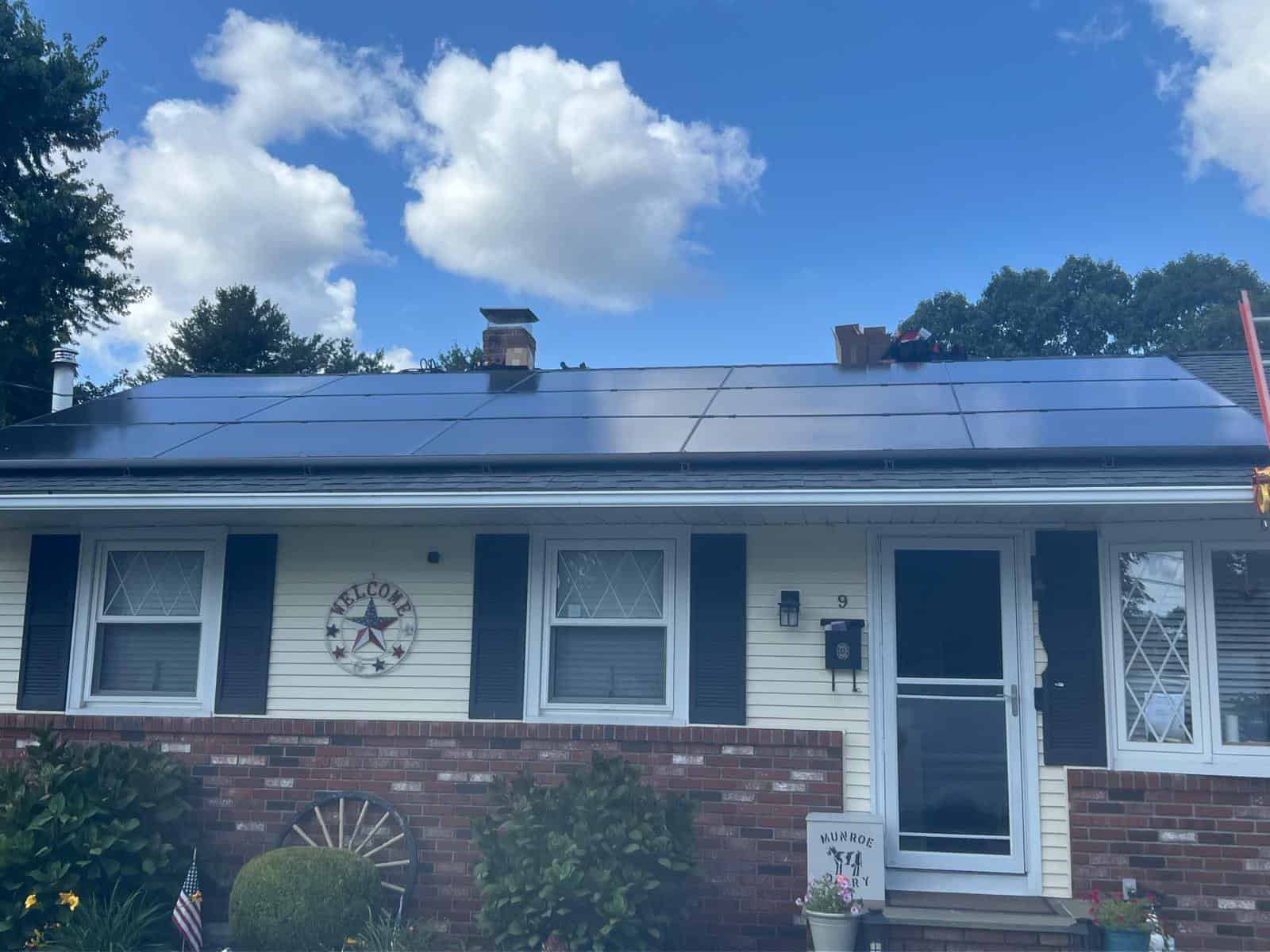
Need a New Roof? Bundle and Save.
Our Roof + Solar Bundle makes it easy for Providence homeowners to get a new roof and solar at the same time. Since the roof is an essential part of the solar project, you save big by bundling — especially on the older housing stock found across Federal Hill, Elmhurst, and the East Side.
Learn About Roof + SolarReady to Install Solar in Providence?
Get a free quote from installers who know Providence's roofs, permits, and National Grid inside and out. From College Hill to Elmhurst, we handle it all.
Get Your Free Quote