Key takeaways
- Choose the solar company before you choose the panels. You will rely on your installer's design, paperwork and warranty for 25 years or more, so a licensed, local company that is easy to reach after the sale matters more than the brand name printed on the panels.
- A good solar installer designs your system from your real electric bills, prices every way to pay on the same design, explains which incentives apply and who applies for them, and puts every warranty in writing. It also tells you plainly when solar isn't a good fit for your home.
- Ask every company the same questions: how they sized the system, what it should produce each year, what each payment option costs in total, who handles permits and incentives, what the warranties cover, and who you call after installation. Good answers are specific and come in writing.
- Before you sign, check the company's licenses with your state, read its reviews and complaint history, and compare detailed written bids from several companies. A trustworthy installer gives you time to review the contract and never pushes you to decide on the spot.
Once you decide solar might make sense, the next question is who should install it. Most homeowners talk with a few companies, and the proposals can look alike at first glance. The differences show up in how each company designs your system, prices it and stands behind it.
This article covers what a good installer looks like and the questions that separate one company from another. For the whole process from first quote to power-on, see our guide to going solar, step by step.
Why does the installer matter more than the panels?
A solar system is a long relationship. The panels are designed to run for decades, and your installer's design, roof work and warranty come along for the whole ride. Choose the company first, then the equipment.
The installer decides how many panels go on your roof, where they sit and how much power the system should make. It files your permits, your utility application and your state incentive paperwork. And if something needs attention in year 12, the installer is usually the first call you make.
Two companies can quote the same panel brand and deliver very different results. One sizes the system from your real usage and explains every line. The other picks a standard size and leaves you to sort out the details later.
In New England, the paperwork is a big part of the job. In Massachusetts, the installer applies to SMART 3.0 for you. In Connecticut, it files the RRES application with your utility. In Rhode Island, a state solar grant has to be approved before installation starts. An installer who knows these programs well keeps your project moving.
What does a good solar installer look like?
The U.S. Department of Energy recommends choosing a licensed installer certified by a reputable organization. Beyond that baseline, here is what to look for:
- Licensed and local. The company holds the licenses your state and town require, has crews working in your area, and knows your town's permit office and your utility's process.
- Designs from your bill. It asks for your past year of electric bills and sizes the system to your real usage. Here's why solar companies need your electric bill.
- Prices every way to pay on the same system. Cash, loan, lease, PPA and prepaid PPA, all on one design, so you can compare the monthly cost and the total cost fairly.
- Explains the incentives, and who applies. Which state programs the price assumes, who files for them, and what happens if one isn't approved.
- Puts warranties in writing. What each one covers, for how long, and who stands behind it.
- Is honest about poor fits. Heavy shade or a roof near the end of its life should come up in the first conversation, not after you sign.
- Is reachable after the sale. You should know who to call about monitoring, service and warranty claims once the crew leaves.
What questions should you ask a solar company?
Ask every company the same questions so the answers line up. Good answers are specific, and a good company is happy to put them in writing.
| Question | What a good answer sounds like |
|---|---|
| How did you size my system? | From your past year of bills and your roof, with room for an electric car or heat pump if you plan one. |
| How much power should it make each year? | A production estimate in kilowatt-hours per year, compared with your yearly usage. |
| Which panels and inverters are you using? | Brand and model for each, and why they suit your roof. |
| What does each way to pay cost? | Cash, loan, lease, PPA and prepaid PPA priced on the same design, with the total cost of each. |
| Which incentives does the price assume, and who applies? | The specific state programs, who files the paperwork, and what happens if one isn't approved. |
| What do your warranties cover? | Each warranty and guarantee in writing: what it covers, how long, and who backs it. |
| Who handles permits and the utility? | The installer files them and tells you who your contact is while they're in review. |
| How long will it take? | A schedule for your town and utility, with a note on what can slow it down. |
| Is my roof ready for solar? | An honest read on its age and condition, including when a new roof should come first. |
| Who do I call after installation? | A named team or number for monitoring, service and warranty claims. |
Our questions to ask solar companies page answers many of these for Evergreen Solar, and you can hold any company's answers up against it.
Pay attention to how each company answers, not just what it says. If a salesperson can't tell you how the system was sized or what it should produce, ask who can. A company that turns a specific question into a general promise about savings is telling you something about how it will handle problems later.
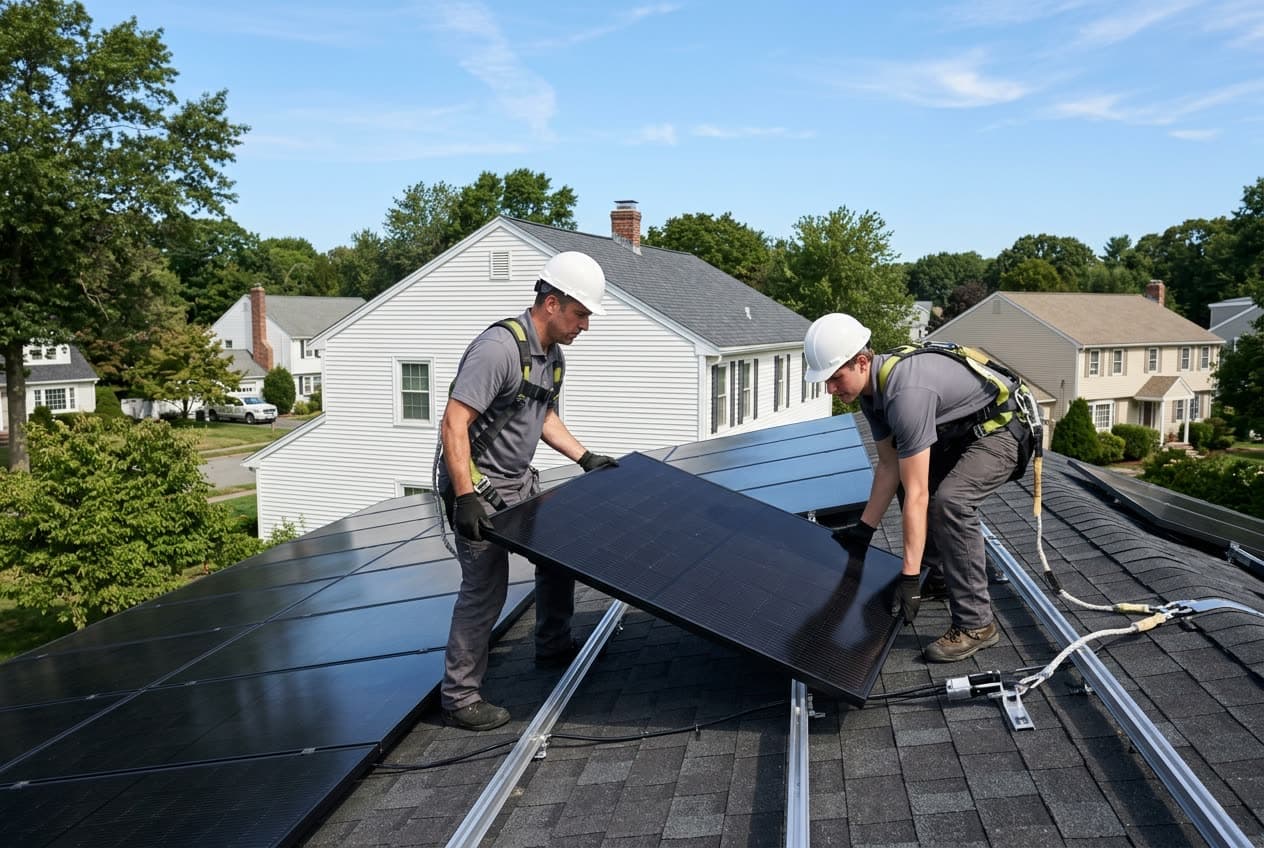
How do you check a solar company before you sign?
A good conversation is a start, not proof. The Federal Trade Commission suggests a few checks before you commit:
- Confirm licenses. Check with your state contractor licensing board and consumer protection office that the company has the licenses your state, county and town require.
- Read reviews and complaints. Search the company's name with the words "complaints" and "reviews," and ask friends and neighbors who went solar.
- Ask for local references. The New York Attorney General's solar guide suggests asking for references from customers in your area.
- Compare detailed written bids. Each one should show the system size, expected output, the full installed cost and the warranties.
Also watch how the company sells. Pressure to sign the same day, a request to sign on a tablet without seeing the whole agreement, or a promise that a government program pays for everything are reasons to slow down. Our guide to "free" solar panel offers covers the most common version of that pitch.
When you get the contract, read it with the quote next to you. The FTC suggests checking that the contract matches what the ads, proposals and salespeople told you, and reviewing the warranties, cancellation policy, payment schedule and any fees. An honest business gives you time to do that.
How does Evergreen Solar approach it?
We built our process around the same checklist. Here is what you can expect from Evergreen Solar, and what you can ask any other company to match:
- No cold calls or surprise visits. We only contact homeowners who ask to hear from us.
- Pressure-free consultations. You get time to review the design and the contract.
- One fair, fixed price. The same price for everyone, every time, with no haggling.
- An honest answer. If solar isn't right for your home, we'll tell you.
- Coverage in every package. Tier 1 panels, a 25-year comprehensive solar warranty and a 25-year power production guarantee.
Evergreen Solar is BBB accredited with an A+ rating. You can read more about how we operate, including how to report a call from someone claiming to be us.
How do you make the final decision?
Lay your quotes side by side and compare them on the same terms: system size, expected yearly production, equipment, the total cost of each way to pay, incentives and warranties. The lowest monthly payment isn't always the best deal, so look at the full cost over the life of each option.
Then compare the monthly cost with your electric bill today. For most homes, a solar payment is lower than the bill it replaces. Our guide to paying for solar explains how cash, loans, leases and PPAs differ, and what solar costs and saves covers the numbers.
If you're weighing a lease or PPA, ask each company what rate or payment it offers and whether that amount rises over time. Because these systems qualify for the 30% federal credit, you get a lower rate or price, which is often a better deal than buying. Our guides to solar PPAs and how a solar lease uses the tax credit explain how it works.
Finally, trust how each company made you feel. The right installer answered your questions plainly, gave you time, and treated you like someone it plans to work with for the next 25 years. When you're ready, the rest of the path is in our step-by-step guide to the solar installation process.
Frequently asked questions
How many solar companies should I get quotes from?
Get detailed written quotes from several companies, as the Federal Trade Commission suggests, so you can see what a fair design and price look like for your home. More quotes only help if you compare them on the same terms: system size, expected yearly production, total cost for each way to pay, incentives and warranties.
Is it better to choose a local solar installer or a national company?
A local installer knows your town's permit office, your utility's approval process and your state's incentive programs, and it is easier to reach if you need service years from now. Whatever its size, look for a company with installation crews working in your area and a clear answer about who you call after installation.
Should I choose a solar installer based on the panel brand?
Not on its own. Reputable installers use quality panels, so the bigger differences between quotes are usually the design, the production estimate, the total cost of each payment option and the warranties. Ask which panels and inverters each quote uses, then judge the company on how well it designs, installs and stands behind the system.
What should I ask a solar company about warranties?
Ask what each warranty covers, how long it lasts and who stands behind it: the panel maker, the inverter maker or the installer. Ask whether the installer's own work and the roof attachments are covered, whether the company guarantees how much power the system produces, and get every answer in writing before you sign.
Your next step
See what solar would do for your home
We design a system for your roof and show you the numbers for every way to pay. Free, with no pressure.
Get my free solar quoteKeep reading
How we wrote this
This page was written by the Evergreen Solar team, which designs and installs home solar across Massachusetts, Rhode Island, Connecticut, New Jersey and Pennsylvania. Program rules and rates change, so we check every figure against the primary source listed below and note the date we last did. If something has changed, tell us at our contact page.
Sources
- U.S. Department of Energy: Walk Me Through It, A Step-by-Step Guide for Consumers Going Solar (2021)
- Federal Trade Commission: Solar Power for Your Home (April 2022)
- Federal Trade Commission: Solar energy is rising in popularity. So are the scams (Sept. 26, 2024)
- New York State Attorney General: Going Solar (2020)