Key takeaways
- Solar is not a scam. Panels on a well-suited roof make real electricity and lower real bills, and for most homes the monthly solar payment is less than the electric bill it replaces. The problems come from certain sales tactics, not from the technology, so the goal is to buy solar the safe way.
- The biggest red flags are visits or calls you didn't ask for, pressure to sign the same day, claims that solar is free or that a government program or your utility pays for it, a tablet signature without the full contract, vague pricing, and a low loan rate with a dealer fee hidden in the price.
- If you're pitched, take your time. Ask for the full proposal and contract in writing, check the company's licenses and reviews, and compare quotes from several companies. The FTC's Cooling-Off Rule gives you three business days to cancel many sales made at your home, so read your contract's cancellation terms.
- Report a solar scam to the Federal Trade Commission at ReportFraud.ftc.gov or to your state attorney general. Evergreen Solar never cold calls or knocks on doors, so if someone claims to be from Evergreen Solar and you didn't ask to hear from us, report it on our How We Operate page.
Maybe someone knocked on your door with a tablet and an offer that sounded too good. Maybe a caller said your utility has a new solar program. Either way, it's fair to wonder whether solar is a scam.
It isn't, but some of the ways it gets sold deserve a closer look. This article covers the red flags, what to do when you're pitched, and how to buy solar safely. For the full buying process, see our guide to going solar, step by step.
Is solar a scam?
No. Solar panels on a well-suited roof produce real electricity, and that electricity lowers a real bill. For most homes, the monthly solar payment is less than the electric bill it replaces, and across Evergreen Solar customers, savings average about 15% on day one.
The scams are about how solar gets sold. The Federal Trade Commission warned in September 2024 that as solar grows more popular, so do scams, most often pitches claiming solar is free or that a government program covers the whole cost. The technology is sound. The goal is to buy it from a company that treats you fairly.
Part of the confusion is that real solar offers can sound a lot like scams. You can go solar with $0 down through a loan, a lease or a power purchase agreement. That isn't free solar. You still pay for the panels or the power they make, just month by month instead of up front. Our guide to solar financing explains each option.
How do door-to-door solar sales work?
Door-to-door solar sales usually start with a knock or a call you didn't ask for. The salesperson may open with a question about your electric bill, mention a program in your neighborhood, or offer a quick savings check on a tablet.
Not every door knock is a scam, and some real companies sell this way. But an uninvited visit is where pressure works best. You haven't compared companies, you don't have your bills in front of you, and the salesperson controls the pace. That is why the same rule applies to every pitch at your door: listen if you like, but don't decide on the spot.
What are the red flags in a solar sales pitch?
Slow down if you hear or see any of these:
- Contact you didn't ask for. A knock or call out of the blue, especially one that pushes for a same-day appointment.
- Pressure to sign today. "This price ends tonight" or "the program closes this week." The FTC says to stop if someone rushes you to sign.
- "Free solar" or "the government pays for it." The FTC says going solar isn't free and calls claims that a government program covers the whole cost lies. Our guide to "free" solar panels explains what those offers really are.
- Claims to be from your utility or the government. The FTC warns about companies claiming a government affiliation, and the Minnesota Attorney General has acted against solar companies whose salespeople misled people about ties to their utilities.
- Signing on a tablet without the full contract. The FTC warns against signing on an electronic tablet when you haven't been shown the whole agreement.
- Vague pricing. A monthly number with no system size, production estimate or total cost in writing.
- A big deposit up front. The FTC warns against companies that promise large savings and demand large upfront payments, especially when they push you to act fast.
- A low rate with a hidden dealer fee. The Consumer Financial Protection Bureau found that solar loan dealer fees are typically 10% to 30% of the cash price and are often built into the loan amount without being shown as a markup. Our guide to solar loan rates and dealer fees shows how to spot one.
One more to watch: a promise of a 30% federal tax credit on a system you buy today. That homeowner credit ended for systems installed after December 31, 2025. The credit still lowers the price of leases and PPAs, so ask any salesperson exactly which credit they mean and how it lowers your price.
What should you do when a solar salesperson shows up?
You don't need to be rude, and you don't need to decide anything. Here's a simple plan:
- Get the name and company. Ask for identification and the company's full name, not the name of a program.
- Ask for everything in writing. The full proposal and the full contract, with the system size, production estimate, total cost, warranties and any fees.
- Take your time. An honest business gives you time to review a contract, the FTC says.
- Check the company. Confirm its licenses with your state, and search its name with "complaints" and "reviews."
- Compare quotes. Get detailed written bids from several companies on the same terms.
If a salesperson won't leave the proposal or contract with you to read, or says the offer disappears once they walk away, you have your answer. A fair price will still be fair after you've had a few days to think.
Our questions to ask solar companies make a handy checklist for the conversation.
Can you cancel a solar contract you signed at home?
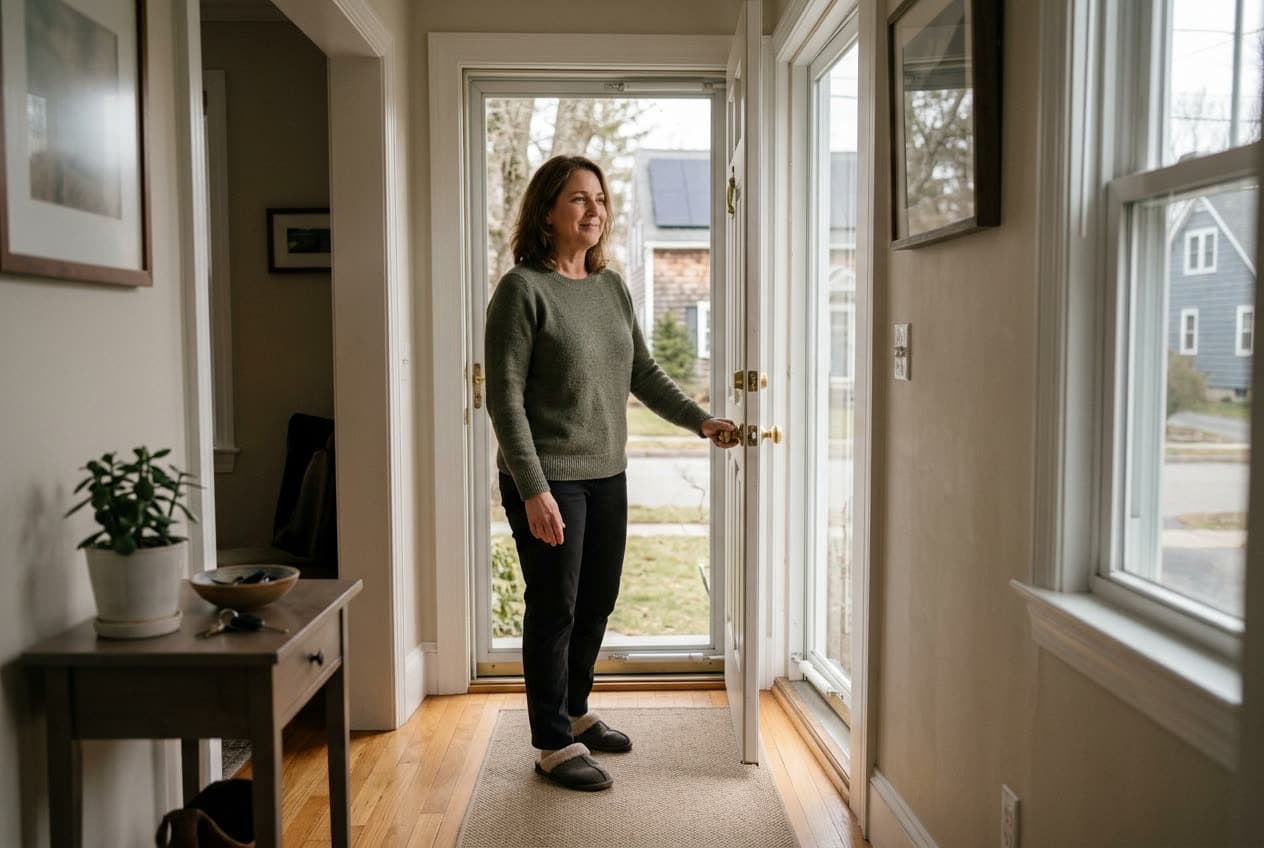
Often, yes, if you act quickly. The FTC's Cooling-Off Rule gives you until midnight of the third business day to cancel many sales made at your home, your workplace or a seller's temporary location. The seller has to tell you about this right and give you two cancellation forms.
Some kinds of sales are excluded, so read your contract's cancellation terms right away. The New York Attorney General's solar guide also notes that a three-business-day cancellation period may be required by law. Send your cancellation in writing, keep a copy, and note the date you sent it.
Where do you report a solar scam?
Report solar scams to the Federal Trade Commission at ReportFraud.ftc.gov, and to your state attorney general's consumer protection office. Note the salesperson's name, the company, the date and what was said. That detail helps investigators connect complaints.
Some callers even use real company names. If someone claims to be from Evergreen Solar and you didn't ask to hear from us, it probably wasn't us. Please report it on our How We Operate page, which helps us shut down impersonators.
What does a legitimate solar offer look like?
A fair offer is the opposite of a pressure pitch. It starts when you ask for it, uses your real electric bills, shows the system size and expected production, and prices every way to pay on the same design. It explains which incentives apply and who applies for them, puts every warranty in writing, and gives you time to decide.
How Evergreen Solar sells
We don't cold call and we won't knock on your door. We only contact homeowners who ask to hear from us, our consultations are pressure-free, and everyone gets the same fair, fixed price. If solar isn't right for your home, we'll tell you. Every solar package includes a 25-year comprehensive solar warranty and a 25-year power production guarantee.
With our Day One Savings Guarantee, we compare your solar quote with your average electric bill. If the quote isn't lower, we'll offer to cancel your consultation, so your time isn't wasted. It applies to solar-only projects and isn't a guarantee of production; the terms have the details.
Before anyone pitches you, it helps to know what solar really costs and saves. Then walk through the solar installation process at your own pace.
Frequently asked questions
Are door-to-door solar salespeople legit?
Some work for real companies, but an uninvited visit is where most high-pressure tactics happen, so treat it with care. Ask for the salesperson's name and company, take the proposal and contract to review on your own time, and never sign the same day. A legitimate company will still be there next week.
Is free solar a scam?
Going solar isn't free, and the Federal Trade Commission calls claims that a government program covers the whole cost lies. What is real is $0-down solar: a loan, lease or power purchase agreement with nothing paid up front, where your monthly solar payment is usually lower than the electric bill it replaces.
How long do I have to cancel a solar contract signed at home?
The FTC's Cooling-Off Rule gives you until midnight of the third business day to cancel many sales made at your home, and the seller must tell you about that right and give you cancellation forms. Some sales are excluded, so check your contract's cancellation terms and send your cancellation in writing before the deadline.
What should I do if a solar salesperson says they're from my utility?
Ask for identification and the name of the company they actually work for, and don't share your account details or sign anything. Call your utility at the number on your bill to check the claim. State attorneys general have found solar salespeople falsely claiming ties to utilities, so report it to your state attorney general or the FTC.
Your next step
See what solar would do for your home
We design a system for your roof and show you the numbers for every way to pay. Free, with no pressure.
Get my free solar quoteKeep reading
How we wrote this
This page was written by the Evergreen Solar team, which designs and installs home solar across Massachusetts, Rhode Island, Connecticut, New Jersey and Pennsylvania. Program rules and rates change, so we check every figure against the primary source listed below and note the date we last did. If something has changed, tell us at our contact page.
Sources
- Federal Trade Commission: Solar energy is rising in popularity. So are the scams (Sept. 26, 2024)
- FTC Cooling-Off Rule (16 CFR Part 429, eCFR)
- Federal Trade Commission: Solar Power for Your Home (April 2022)
- Consumer Financial Protection Bureau: Issue Spotlight: Solar Financing (Aug. 7, 2024)
- Minnesota Attorney General: Ellison obtains $150,000 from solar installers (Sept. 9, 2025)
- New York State Attorney General: Going Solar (2020)