Key takeaways
- A solar battery and a standby generator both keep your home running in an outage, but they work differently. A battery stores power and recharges from your solar panels. A generator burns natural gas or propane. A battery is silent and needs little upkeep, while a generator needs regular servicing and test runs.
- A generator can run heavy loads for days as long as its fuel lasts. A battery paired with solar refills a little or a lot each day depending on the sun, which makes it strongest for essentials. In a long winter storm with snow on the panels, a generator has the edge on runtime.
- A battery can earn money when the power is on. Utilities in Massachusetts, Connecticut and Rhode Island pay battery owners to share stored power on peak summer days. A generator only does its job during an outage, and the rest of the year it sits waiting.
- You don't have to choose just one. Many homeowners keep an existing generator for long outages and add a solar battery for quiet, automatic backup of essentials and income from a battery program. Your installer can design the battery around the circuits that matter most to you.
After a few long outages, many New England homeowners start pricing backup power. The two options that come up most are a standby generator and a home battery paired with solar panels.
Both keep the lights on. They just do it in very different ways. This article compares them side by side and helps you decide which one, or which mix, fits your home. For the basics of what a battery does, see our guide to solar batteries and backup power.
What's the difference between a solar battery and a generator?
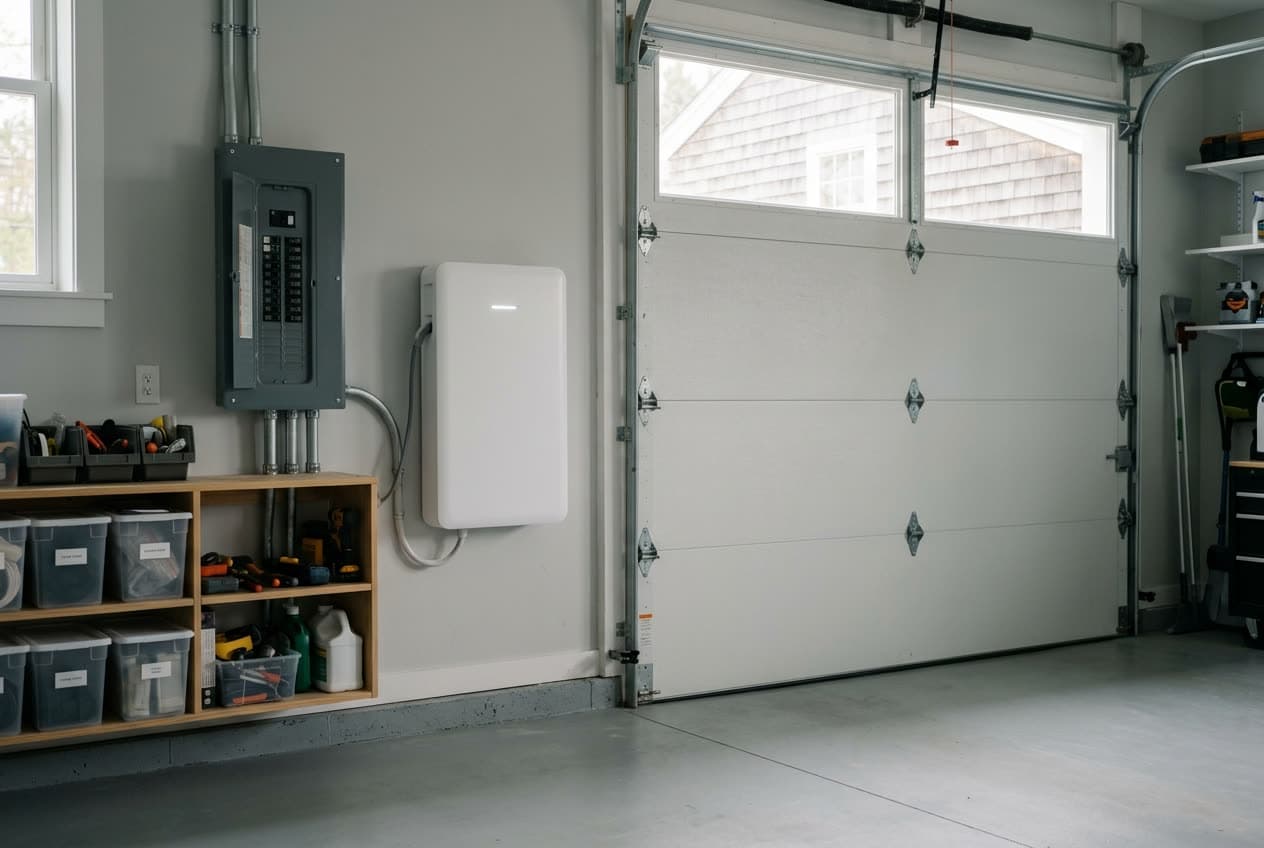
A standby generator is an engine that sits outside your home and burns natural gas or propane to make electricity when the grid goes down. A solar battery stores electricity, powers your home during an outage and refills from your solar panels.
| Solar battery | Standby generator | |
|---|---|---|
| Power source | Stored electricity, refilled by your panels | Burns natural gas or propane |
| Noise | Silent | Runs like a small engine |
| Upkeep | Little routine maintenance | Regular servicing and test runs |
| Starting up | Switches over automatically | Starts automatically with a transfer switch |
| Long outages | Lasts longest on essentials, refilled by the sun | Runs as long as fuel lasts |
| Exhaust | None | Produces carbon monoxide; must run outdoors |
| When the power is on | Can earn from battery programs | Sits idle |
Neither is better for every home. The right choice depends on how long your outages last, what you need to keep running and whether you have solar or plan to.
How do fuel, noise and upkeep compare?
Fuel. A generator needs a steady supply. On a natural gas line, it runs as long as gas keeps flowing. On propane, it runs as long as the tank lasts, and getting a delivery after a big storm isn't always quick. A battery's "fuel" is sunlight. Your panels refill it during the day, with no tank to check.
Noise. A generator sounds like a small engine running outside your house, and so do your neighbors' when the whole street loses power. A battery makes no engine noise at all, which matters if the outage lasts through the night.
Upkeep. A generator is an engine, so it needs regular servicing like oil changes and scheduled test runs to make sure it starts when you need it. A battery has no engine and no oil, and needs little routine maintenance. Your solar monitoring app shows the battery's charge alongside your panels' production. Our article on solar panel maintenance covers what owning a system involves.
Starting up. Both can take over without you lifting a finger. A standby generator uses an automatic transfer switch to start the engine and move your home onto generator power. A battery systemseparates your home from the grid and switches to stored power on its own. A portable generator is different: someone has to wheel it out, fuel it, start it and plug things in, often in bad weather.
Batteries we install as part of an Evergreen Solar system are covered by the same 25-year warranty as the system, so the battery and the panels are protected for the same stretch.
Which lasts longer in a multi-day outage?
This is where a generator has a real advantage. As long as it has fuel, a generator can run heavy loads around the clock for days, including central air, electric heat and a well pump all at once.
A battery holds a set amount of energy. How long it lasts depends on what you run. Backing up essentials, such as the refrigerator, lights, Wi-Fi and the heating system's fan or pump, stretches it much further than running the whole house.
Solar is what gives a battery staying power. Each sunny day, the panels refill what you used overnight, so a household running essentials can keep going through an outage that lasts several days. In winter, short days and snow on the panels mean less recharging, which is when a generator's fuel supply matters most. Our article on solar panels and snow explains how snow affects production.
Is a battery safer than a generator for indoor air?
A generator burns fuel, so it produces exhaust that contains carbon monoxide, a gas you can't see or smell. The CDC warns never to use a generator inside your home, garage or carport, and to keep generators outside, at least 20 feet from doors, windows and vents.
A standby generator is installed outdoors for that reason, but placement still matters, and so do working carbon monoxide alarms inside the home. The risk is highest with portable generators run too close to the house during an outage.
A battery doesn't burn anything, so it gives off no exhaust. Like any electrical equipment, it has to be installed to code by a licensed installer, and your installer picks a spot that meets the manufacturer's requirements.
Which one pays you back when the power is on?
Most of the year, the power is on. A generator does nothing during that time. A battery can keep working for you.
- Massachusetts: ConnectedSolutions through Mass Save pays $275 per kW of the battery's average contribution during summer events, when the grid is busiest.
- Connecticut: Energy Storage Solutions pays an enrollment incentive plus $300–$550 per kW-year for 10 years for new enrollments from April 1, 2026.
- Rhode Island: Rhode Island Energy runs its own ConnectedSolutions battery program for battery owners.
There are also good ways to pay for a battery. In Massachusetts, the Mass Save HEAT Loan offers 0% financing up to $25,000 for batteries. In Connecticut, the Smart-E loan covers batteries as well as panels. In Rhode Island, the Renewable Energy Fund grant adds $5,000 when a battery is funded together with owned solar. Our guide to solar loan programs in Massachusetts and Connecticut has the details.
With a lease or PPA, a battery that's part of the system can still qualify for the 30% federal credit, which lowers what you pay. If you're paying cash or using a loan, the federal homeowner credit for batteries ended for systems installed after December 31, 2025.
Which backup fits your home?
A solar battery tends to fit if you have solar or plan to, your outages usually last hours to a few days, and you mainly want to keep essentials running. It also fits if you'd rather not deal with fuel or engine upkeep, or want income from a battery program.
A generator tends to fit if you lose power for many days at a time, especially in winter, or you need to run heavy loads like central air or electric heat through the whole outage.
If someone in your home relies on medical equipment or you depend on a well pump, plan your backup carefully either way, and tell your installer up front.
Can you keep your generator and add a battery?
Yes, and it's a common setup. The battery handles most outages quietly and automatically, and the generator stays ready for the rare storm that knocks the power out for days. The battery also earns from a battery program the rest of the year.
The two have to be wired so they work together safely, so mention your generator during your solar consultation and site visit. Your installer checks your electrical panel and plans the battery around the circuits you want covered.
If you already have solar, you can usually add a battery to it. Our original post on how solar panel batteries work covers the basics.
Want to compare options for your home? Call us at (508) 507-2908. We'll design your system with and without a battery so you can see how each fits.
Frequently asked questions
Is a solar battery better than a generator?
It depends on what you need. A battery is silent, switches on by itself, needs little maintenance, recharges from your panels and can earn money through battery programs. A standby generator needs fuel and regular servicing, but it can power heavy loads for days. Many homes with solar find a battery covers their essentials well.
Can a solar battery replace a whole-house generator?
Sometimes. A whole-home battery setup can run an entire house, but heavy loads like central air, electric heat or a well pump take more battery capacity, and winter recharging from solar is limited. If you need to run everything for days at a time, a generator or a battery plus generator may fit better.
Do solar batteries give off carbon monoxide?
No. A home battery stores and releases electricity without burning fuel, so it doesn't produce exhaust or carbon monoxide. Generators do burn fuel, which is why the CDC says never to run one inside a home, garage or carport and to keep it at least 20 feet from doors, windows and vents.
Can I have a generator and a solar battery?
Yes. Many homeowners keep an existing generator for long outages and add a battery for everyday backup of essentials. The two need to be wired so they work together safely, so tell your installer about the generator before the battery is designed. Your installer can plan the battery around the circuits you want covered.
Your next step
See what solar would do for your home
We design a system for your roof and show you the numbers for every way to pay. Free, with no pressure.
Get my free solar quoteKeep reading
How we wrote this
This page was written by the Evergreen Solar team, which designs and installs home solar across Massachusetts, Rhode Island, Connecticut, New Jersey and Pennsylvania. Program rules and rates change, so we check every figure against the primary source listed below and note the date we last did. If something has changed, tell us at our contact page.
Sources
- CDC: Avoiding carbon monoxide poisoning (natural disaster PSA toolkit)
- Mass Save: Battery storage and ConnectedSolutions
- Connecticut Green Bank: Energy Storage Solutions program updates for 2026 (Feb. 2, 2026)
- Rhode Island Energy: ConnectedSolutions battery program
- Cape Light Compact: Mass Save HEAT Loan