Key takeaways
- Solar panels need very little maintenance. They have no moving parts, and in New England rain and snow wash off most dust and pollen. Routine upkeep is mostly checking your monitoring app, an occasional professional inspection, and planning ahead for inverter service and any future roof work.
- Most homes never need their panels cleaned. Rain does the job here. If heavy pollen, bird droppings or leaves build up, rinse gently with a garden hose from the ground or hire a professional. Never use a pressure washer, harsh brushes or soap, and never climb onto the roof yourself.
- For most homes, routine solar maintenance costs little or nothing in a typical year. The bigger long-term items are inverter service or replacement during the system's life and removing and reinstalling the panels if your roof needs work. With a lease or PPA, maintenance and repairs aren't on your budget.
- Every Evergreen Solar package includes a 25-year comprehensive solar warranty and a 25-year power production guarantee. If you own the system, those warranties and your installer cover you. With a lease or PPA, the company that owns the system handles maintenance and repairs for you.
A lot of homeowners like the idea of solar but worry about taking on one more thing to look after. The good news is that solar asks very little of you, and much of what it does ask, someone else can handle.
This article goes deeper than the ownership section of our step-by-step guide to going solar. It covers what maintenance really involves, when cleaning makes sense, what upkeep costs, and who is responsible with a loan, lease or PPA.
Do solar panels need maintenance?
Very little. Solar panels have no moving parts to wear out, no fluids to change and no filters to swap. They sit on your roof and turn sunlight into electricity, and in New England, rain and snow wash off most of the dust and pollen that land on them.
That doesn't mean you can forget about the system entirely. A solar system is a long-term piece of your home, and panels last 25 to 35 years on average. Over that time, a few things deserve attention: keeping an eye on production, an occasional inspection, the inverters, and your roof.
The panels themselves also age gently. They produce slightly less each year, and NREL's review of field data found a median loss of about 0.5% a year. That slow decline is normal and is built into a good production estimate. It isn't a maintenance problem you need to fix.
Do solar panels need to be cleaned?
Usually not here. In drier, dustier parts of the country, dirt can build up on panels for months between rains. New England gets regular rain, and melting snow rinses the glass too. For most homes, that natural washing is all the cleaning the panels ever need.
There are a few times a closer look makes sense:
- Heavy spring pollen that sticks around through a dry stretch.
- Bird droppings on one spot, which can shade part of a panel.
- Leaves, pine needles or seeds collecting along the bottom edge of the panels, especially under overhanging trees.
If you do need to clean, keep it gentle and keep your feet on the ground. A soft stream from a garden hose, aimed from the yard, handles most buildup. For anything more, hire a professional who cleans solar panels.
A few things can do more harm than the dirt: pressure washers, stiff or metal brushes, harsh soaps, and hot water on cold glass. Don't climb onto the roof to clean panels either. A wet, sloped roof is dangerous, and stepping on panels can crack the cells inside them.
What does solar panel upkeep look like over the years?
Here is what owning a solar system involves across its life:
- Watch your monitoring app. It shows what your system produces, what your home uses and the health of the system. You don't need to check it daily. A glance now and then, and comparing each month with the same month last year, will tell you if something is off.
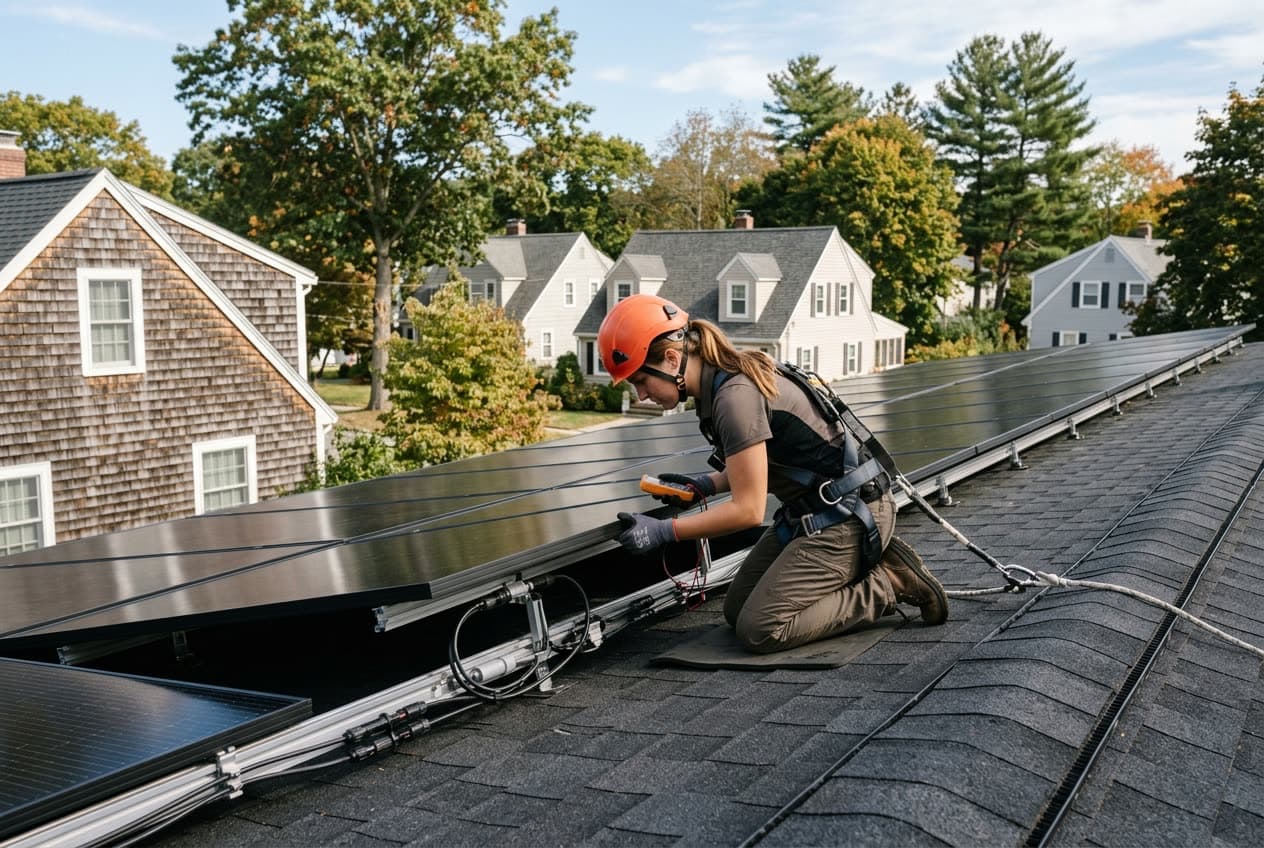
- An occasional professional inspection. A trained technician can check the wiring, racking, roof attachments and inverters, which you can't safely see from the ground. After a major storm, a look from the yard is a good first step.
- Inverter service. The inverters turn the panels' power into the kind your home uses. They often carry their own warranties, sometimes shorter than the panels', and they may need service or replacement during the system's life. Our comparison of micro-inverters and string inverters explains the difference.
- Critters and debris. Squirrels and birds sometimes nest in the gap under rooftop panels, where they can chew wiring or trap leaves. If that happens, an installer can fit guards around the edge of the array.
- Future roof work. If your roof needs repairs or replacing while the panels are on it, the panels have to come off first and go back on afterward. Our roof replacement service for homes with solar handles that whole job.
What about snow? Snow on the panels pauses production for a while, but tilted panels usually shed it once the sun reaches them. Published estimates collected by Sandia National Laboratories put snow losses at about 1 to 12 percent of a year's production. Most homeowners leave it alone, and you should never climb the roof to clear it.
How much does solar panel maintenance cost?
For most homes, routine upkeep costs little or nothing in a typical year. There's no regular service contract a solar system has to have, cleaning is rarely needed in New England, and the monitoring app comes with the system.
The real costs over the system's life tend to come from two places:
- Inverter service or replacement. This is the biggest likely equipment item for an owner. Check how long your inverter warranty runs compared with your panel warranty, and what it covers, so you know which years are protected.
- Roof work. Removing and reinstalling panels adds to the cost of a future roof job. The best way to avoid it is to start with a roof that will last. If your roof is older, see our guide to solar and your roof before you install.
We don't publish a typical dollar figure for solar maintenance, because what a home spends depends on its equipment, its roof and how it pays for solar. With a lease or PPA, the answer is simpler: maintenance and repairs aren't on your budget at all. Our guide to solar cost and savings covers the full cost picture.
Who handles maintenance with a loan, lease or PPA?
Who takes care of the system depends on who owns it.
| Way to pay | Who owns the system | Who handles maintenance and repairs |
|---|---|---|
| Cash or solar loan | You do | You, backed by your warranties and your installer |
| Lease | The leasing company | The leasing company, so repairs aren't on your budget |
| Power purchase agreement (PPA) | The PPA company | The PPA company, so repairs aren't on your budget |
With a lease or PPA, you also get a lower payment or rate, because the system qualifies for the 30% federal credit. That is often a better deal than buying, and the hands-off upkeep comes with it. Our article on how a solar PPA works explains the details.
If you own the system, your warranties cover defects and production, and your installer is your first call for anything else.
What do solar warranties cover?
Warranties are what protect you over the system's life. Every Evergreen Solar package includes a 25-year comprehensive solar warranty and a 25-year power production guarantee. If the system doesn't produce what we promised, we cover the difference.
Keep your contract and warranty papers somewhere easy to find. Before you sign with any installer, ask how long each warranty lasts, what it covers, and who you call to make a claim. Damage from things like a pressure washer or someone walking on the panels is the kind of problem you don't want to argue about later.
If you're planning roof work, read whether solar panels void a roof warranty first.
What should you do if your solar production drops?
Start with the obvious causes. Production naturally falls on short winter days, under heavy clouds and when snow covers the panels. Compare with the same month last year rather than with last month.
If production stays low on clear, sunny days, or the app shows a panel or inverter that isn't reporting, call your installer or, with a lease or PPA, the company that owns the system. Don't open electrical equipment or go up on the roof yourself.
Have questions about upkeep on a system you're considering? Call us at (508) 507-2908, and we'll walk you through what owning one involves.
Frequently asked questions
How often should solar panels be cleaned?
In New England, most homes never need to schedule a cleaning, because rain and melting snow rinse off dust and pollen. Check your monitoring app instead of following a calendar. If production drops and you can see heavy pollen, droppings or leaves on the panels, a gentle rinse from the ground or a professional cleaning is enough.
Can I pressure wash my solar panels?
No. A pressure washer can damage the glass, the seals around the panel edges and the wiring underneath, and damage caused that way may not be covered by your warranty. If panels truly need cleaning, use a gentle stream from a garden hose from the ground, or hire a professional who cleans solar panels.
Do solar panels need maintenance every year?
Not in the way a furnace or a car does. There's no yearly service that every system needs. Glance at your monitoring app now and then, look at the panels from the ground after big storms, and call your installer if production drops for no clear reason. An occasional professional inspection is a sensible check.
Who pays for solar panel repairs with a lease or PPA?
The company that owns the system. With a lease or power purchase agreement, maintenance and repairs are that company's responsibility, so they aren't on your budget. Your part is to keep the system able to work: let the owner know about problems and coordinate access if your roof ever needs work.
Your next step
See what solar would do for your home
We design a system for your roof and show you the numbers for every way to pay. Free, with no pressure.
Get my free solar quoteKeep reading
How we wrote this
This page was written by the Evergreen Solar team, which designs and installs home solar across Massachusetts, Rhode Island, Connecticut, New Jersey and Pennsylvania. Program rules and rates change, so we check every figure against the primary source listed below and note the date we last did. If something has changed, tell us at our contact page.