Key takeaways
- A roof is a good fit for solar when it gets plenty of direct sun, faces south, east or west, has open space free of vents and skylights, and is in good condition. Many homes in Massachusetts, Connecticut and Rhode Island with a reasonably sunny roof qualify, and an installer confirms it with a roof inspection before anything is signed.
- Roof age matters because solar panels last 25 to 35 years. If your roof is under about 15 years old and in good shape, it's usually ready. If it's older, replacing it as part of the solar project avoids paying to take the panels off and put them back later.
- With our solar + roof program, the new roof is included with your solar installation at a reduced price, with $0 out of pocket, and the total package often costs less than your current electric bill. Those roofs are CertainTeed shingles installed by our partner Global Roofing, backed by a 50-year warranty.
- Shade, direction and roof type change the design more than they rule a home out. East- and west-facing roofs still produce well, microinverters limit the effect of partial shade, and asphalt shingle, metal and flat roofs all work. A heavily shaded or north-facing roof is the usual reason solar doesn't fit.
- A properly installed system doesn't damage your roof. Each mount is flashed and sealed, and Evergreen Solar installations carry a 25-year comprehensive solar warranty. If your roof is ever replaced later, the panels come off and go back on, usually with only a day or two of downtime.
Your roof does most of the work in a solar project. It decides how many panels fit, how much power they make, and whether anything needs to happen to the roof before they go on. The good news is that many homes in Massachusetts, Connecticut and Rhode Island have a roof that can carry solar, and the ones that need work first usually have a straightforward fix.
This guide covers what makes a roof a good fit, how old is too old, when to replace it as part of the project, and what direction, shade, roof type and your electrical panel mean for the design.
What makes a roof good for solar panels?
Five things decide whether a roof suits solar, and an installer checks all of them before you sign. None of them has to be perfect.
| Factor | Ideal | Still works | Usually a problem |
|---|---|---|---|
| Direction | South-facing | East- or west-facing | Only a north-facing slope |
| Sun and shade | Direct sun most of the day | Some morning or evening shade | Shaded most of the day |
| Condition and age | Newer roof in good shape | Older roof replaced with the solar project | Leaks, sagging or rot left unrepaired |
| Open space | Large, uninterrupted slopes | Smaller slopes with a few vents | Little space between vents, dormers and skylights |
| Roof type | Asphalt shingle or standing-seam metal | Flat, or other metal roofs | Slate, clay tile or wood shake (possible, but harder) |
Our original guide, is my roof good for solar?, walks through each factor. For a quick first answer, our free Solar Fit scan checks your roof's sun exposure from satellite data and sketches a preliminary design in about a minute.
How old can your roof be for solar?
Solar panels last 25 to 35 years on average, so the roof under them needs to last too. Our rule of thumb: a roof under about 15 years old and in good condition is usually ready for solar. Past that, we usually recommend replacing the roof as part of the solar project. Either way, we inspect the roof before anything is installed.
Age is a guide, not a verdict. Asphalt shingles last different lengths of time depending on the type: InterNACHI puts older 3-tab shingles at about 20 years and architectural shingles at about 30, and New England freeze-thaw winters can shorten that. Signs your current roof is closer to the end than its age suggests:
- Curling, cracked or missing shingles
- Granules collecting in the gutters
- Soft spots, sagging or stains on the ceiling below
- Past leaks around chimneys, vents or skylights
If you're not sure, ask for the roof to be part of the site visit. A good installer would rather tell you the roof needs work now than put panels on a roof that fails in a few years.
Should you replace your roof before going solar?
If your roof is near the end of its life, yes, and the best time is during the solar project itself. Panels have to come off before a roof can be replaced, so a roof that wears out halfway through the panels' life means paying for removal and reinstallation on top of the new roof. Doing both at once means one project, one schedule and one crew coordinating the work.
That's what our solar + roof program is for. The new roof is included with your solar installation at a reduced price, with $0 out of pocket, and the total package often costs less than your current electric bill. It works whether you buy the system or lease it.
Roofs from the solar + roof program
We install CertainTeed shingles through our roofing partner, Global Roofing, a CertainTeed Select ShingleMaster. Because our solar installations are certified by CertainTeed, the roof keeps its 50-year coverage on materials and labor with panels on top of it, and the roof work carries a 25-year workmanship warranty. The roof and the solar each typically take a day to install.
Our guide to the roof + solar package explains how the roof is included and paid for, and getting a new roof and solar at the same time covers why doing both together saves time and money. You can also see the solar + roof program itself.
Which direction should your roof face for solar?
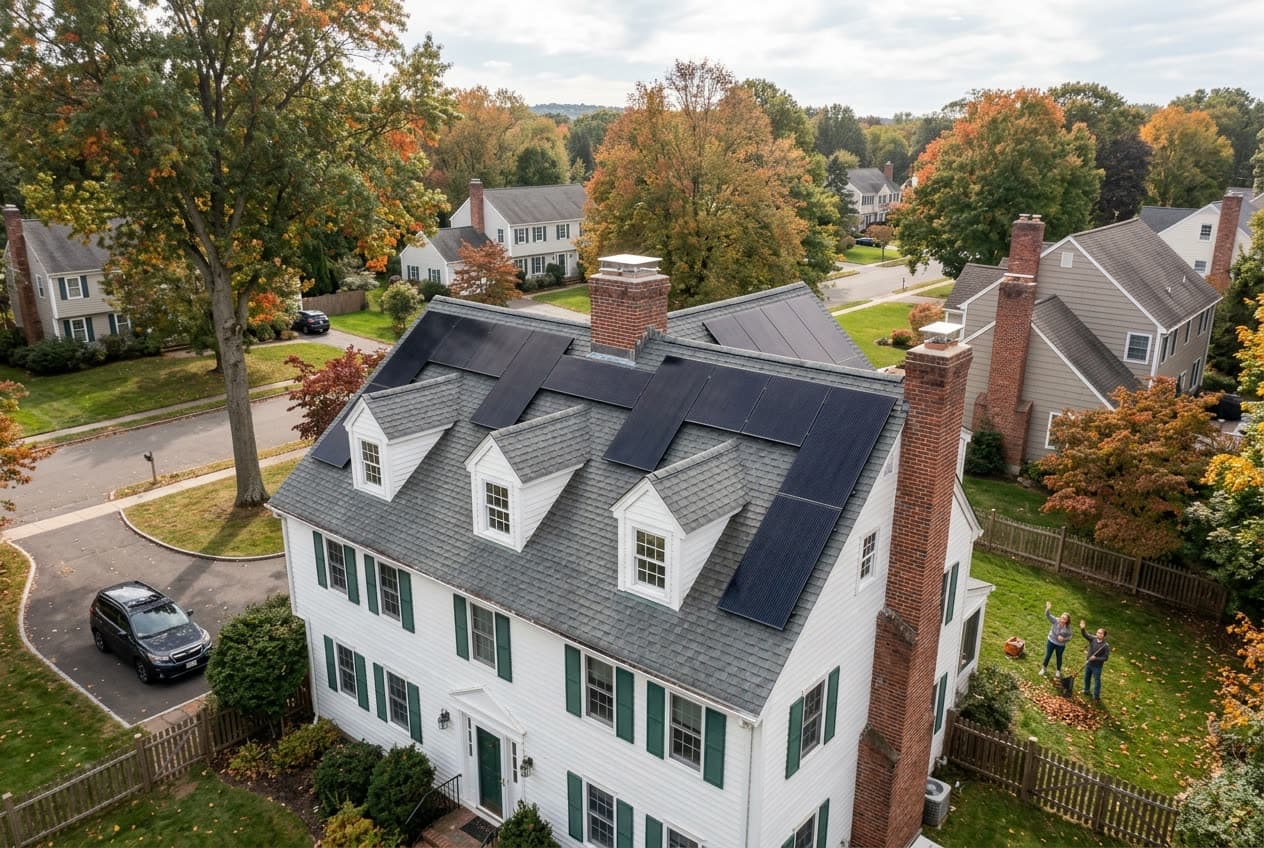
In New England the sun crosses the southern half of the sky, so a south-facing roof collects the most energy over a year. But south isn't the only roof that works.
- South-facing: the most production per panel.
- East- or west-facing: still produces well. East catches the morning sun and west the afternoon, and many homes use both slopes to fit enough panels.
- North-facing: gets the least direct sun, so it's rarely worth covering. Most homes with a north slope have a better slope on the other side.
Pitch matters less than direction, and most sloped roofs work well. A steeper roof also tends to shed snow sooner in winter. On a flat roof, racking tilts the panels toward the sun. The design accounts for both, using historical weather data for your area so the system's yearly production estimate reflects your actual roof.
How much shade is too much for solar panels?
Shade is the most common reason a roof doesn't work for solar, but a little of it rarely rules a home out. What matters is how much of the day the panels sit in shade, and when. A roof that loses an hour of sun in the early morning is very different from one under tall trees all afternoon.
Two things soften the effect. Panels can be placed on the sunniest parts of the roof and left off the shaded corners. And microinverters let each panel work on its own, so one shaded panel doesn't pull down the rest. Our guide to microinverters vs. string inverters explains how that works.
Trees are a judgment call. Trimming a few branches can make a big difference, and sometimes a tree that shades the roof in summer also cools your home. When we design a system, we show you which trees matter and which don't, so you can decide what's worth doing.
Which roof types work for solar panels?
Most roofing materials can carry solar panels. Some are simpler and less expensive to install on than others.
| Roof type | How solar goes on | What to know |
|---|---|---|
| Asphalt shingle | Mounts bolt into the rafters and are flashed under the shingles | The most common and simplest roof for solar |
| Standing-seam metal | Clamps grip the raised seams | Often needs no holes through the roof |
| Other metal roofs | Mounts made for the panel profile | Works well; ask how attachments are sealed |
| Flat or low-slope | Tilted racking, held by attachments or weight | The installer checks how much weight the roof can carry |
| Slate, clay tile, wood shake | Specialized mounts and careful handling | Possible, but more complex and costly; brittle materials can crack |
Evergreen Solar installs on asphalt shingle, standing-seam and other metal roofs, and flat roofs. We don't install on slate. If your roof is slate or tile and also aging, replacing it, or the section under the panels, with shingles is often the simpler path, and our solar + roof program is built for exactly that.
Will solar panels damage your roof or cause leaks?
A properly installed system doesn't. The racking attaches to the rafters under the roof deck, not just to the shingles, and every attachment is flashed and sealed so water flows over and around it. Before the design is final, the installer also checks that the roof structure can carry the panels and the snow that collects on them.
Leaks come from shortcuts: attachments that miss the rafters, flashing that's skipped, or sealant used in place of proper flashing. That's why the installer's workmanship warranty matters as much as the panel warranty. Every Evergreen Solar package comes with a 25-year comprehensive solar warranty and a 25-year power production guarantee.
A related worry is your roof warranty. A reputable installer with a workmanship warranty usually keeps you covered, and our guide to whether solar panels void a roof warranty explains what to check. Panels can even shield the shingles under them from sun and weather.
Do you need an electrical panel upgrade for solar?
Your solar system connects to your home's main electrical panel, so the installer checks it during the site visit. Most homes are fine as they are. Some older homes, especially those with a smaller or aging panel, need an upgrade or a different type of connection before solar can be added.
If you're planning an electric car charger or a heat pump, mention it at the start. Those add load to the same panel, and planning for them now can avoid a second round of electrical work later. Our guide to solar in an all-electric home covers that bigger picture. Whatever electrical work your home needs should be in the quote before you sign, not added afterward.
What if your roof needs work after solar is installed?
Sometimes a roof needs replacing after the panels are already on: storm damage, a roof that aged faster than expected, or a house bought with solar already installed. The panels have to come off first, and many roofing companies won't touch them.
We handle the whole job for homes that already have solar: removing the panels, replacing the roof, and reinstalling the system, usually with it offline for only a day or two. If the rest of the roof is in good shape, we can replace just the section under the panels. See our roof replacement for homes with solar panels. If you're buying a home with solar, our guide to buying a house with solar panels covers what to check on the roof.
What if your roof isn't a good fit for solar?
A roof that won't work today doesn't always mean solar won't work for your home. The usual options:
- Replace the roof as part of the project if age or condition is the problem.
- Trim or remove a few trees if shade is the problem and the trees aren't worth keeping.
- Use a different slope or building, such as a garage or barn roof with better sun.
- Go with a ground-mounted system if you have an open, sunny part of the yard.
And sometimes the honest answer is that solar isn't right for the house. A heavily shaded lot or a home that uses very little electricity may not save enough to justify it, and we'll tell you that rather than sell you a system that doesn't pay off.
The quickest way to find out where your roof stands is to start with the Solar Fit scan, then share a recent electric bill so we can size the system. Our guide to going solar, step by step shows what happens next, and what solar costs and saves covers the numbers.
Frequently asked questions
Should I replace my roof before installing solar panels?
If your roof is older than about 15 years or shows wear, usually yes. Solar panels last 25 to 35 years, so a roof that wears out first means removing and reinstalling the panels mid-life. Replacing it as part of the solar project avoids that. Through our solar + roof program, the roof is included with your solar installation at a reduced price and carries a 50-year warranty.
How old can a roof be to put solar panels on it?
There's no single cutoff, but as a rule of thumb a roof under about 15 years old and in good condition is usually ready for solar. Older asphalt roofs are worth inspecting first: InterNACHI puts 3-tab shingles at about 20 years and architectural shingles at about 30, and New England winters can shorten that.
Do solar panels cause roof leaks?
Not when they're installed correctly. Racking is attached to the rafters, and every attachment is flashed and sealed so water runs over it instead of into it. Leaks come from poor workmanship, which is why the installer's warranty matters. Evergreen Solar installations carry a 25-year comprehensive solar warranty.
Can you put solar panels on a north-facing roof?
You can, but a north-facing roof gets the least direct sun in New England, so it usually produces too little to make sense. Most homes with a north-facing slope also have a south-, east- or west-facing slope that works better. If the whole roof faces north, a ground-mounted system in a sunny part of the yard may be an option.
Do I need to upgrade my electrical panel for solar?
Most homes don't, but some older homes with smaller main panels do. The solar system connects to your electrical panel, so the installer checks its size, condition and space during the site visit. If an upgrade or a different connection is needed, it should be in your quote before you sign.
What happens if I need a new roof after solar is installed?
The panels have to come off before any reroofing. A solar company removes them, the roof is replaced, and the panels are reinstalled, usually with the system offline for a day or two. We do this work for homeowners who already have solar, including partial reroofs of just the section under the panels.
Your next step
Get a solar and roof assessment
We check your roof's condition, design your system, and price solar with or without a new roof. Free, with no pressure.
Get my roof + solar quoteKeep reading
How we wrote this
This page was written by the Evergreen Solar team, which designs and installs home solar across Massachusetts, Rhode Island, Connecticut, New Jersey and Pennsylvania. Program rules and rates change, so we check every figure against the primary source listed below and note the date we last did. If something has changed, tell us at our contact page.
Sources
- U.S. Department of Energy: Homeowner's guide to going solar
- U.S. Department of Energy: End-of-life management for solar photovoltaics (panel lifespan)
- ENERGY STAR: Rooftop solar
- InterNACHI: Standard estimated life expectancy chart for homes
- CertainTeed: Adding solar to your roofing
- Google Project Sunroof: Rooftop solar potential