Key takeaways
- Shade cuts what a solar panel produces, and on some systems one shaded panel can pull down others wired with it. Microinverters let each panel work on its own, which limits the damage. Still, the best fix is design: panels go on the sunniest parts of the roof, and heavily shaded corners are left empty.
- When shade falls matters as much as how much. Midday sun does the most work, so a tree that blocks an hour of early morning light costs far less than one that shades the roof at noon. Leafy trees that drop their leaves in fall shade less in winter, while evergreens shade all year.
- Trees don't automatically rule out solar. A designer maps shade across the whole year using satellite imagery and a site survey, then shows you which trees affect production. Trimming a few branches can make a real difference, and shade trees also help keep your home cool in summer, so removal isn't always the answer.
- Some roofs really are too shaded for solar. The Department of Energy says rooftop panels may not be the most ideal option when nearby trees create excessive shade. An honest installer will tell you so, and Evergreen Solar does: if solar isn't right for your home, we'll tell you.
Tall oaks, maples and pines are part of what makes a New England neighborhood feel like home. They're also the most common reason a roof doesn't work for solar.
A few trees rarely settle the question on their own, though. This article covers how shade affects solar panels, why timing matters, how designers measure it, and when trimming is worth it. For the rest of what makes a roof a good fit, see our guide to solar and your roof.
How does shade affect solar panels?
A solar panel makes electricity from the light that reaches its cells. Shade cuts that light, so the panel makes less power. Light, dappled shade dims a panel. Deep shade from a thick tree canopy can bring it close to a stop.
The bigger issue is how panels are wired together. In a system with a single string inverter, panels are connected in a row, and a shaded panel can hold back the others in its string. That's why a small shadow sometimes costs more production than you'd expect. The Department of Energy's Building America program puts it plainly: shading should be avoided, and shade during the sunniest hours can greatly reduce a panel's output.
Microinverters change that. Each panel gets its own small inverter, so a shaded panel only affects itself and the rest keep working at full strength. Our comparison of micro-inverters and string inverters explains the difference in more detail.
Equipment helps, but placement matters most. A good design puts panels on the sunniest parts of the roof and leaves the shaded corners empty, so the panels you do have earn their place.
Trees aren't the only source of shade. The Building America guide lists chimneys, dormers, antennas and other obstructions alongside trees, and a taller house next door can shade a low roof in winter. A chimney's shadow is small, but it moves across the roof all day, so panels are usually set back from it.
Does it matter when shade hits your roof?
Yes, a lot. The middle of the day, roughly late morning through mid-afternoon, is when panels do most of their work. A tree that shades the roof for an hour after sunrise costs far less than one that blocks the sun at noon.
The season matters too:
- Winter sun sits low. In December the sun stays low in the southern sky, so trees cast long shadows. A tree that clears the roof in June may shade it in January.
- Leafy trees thin out in fall. The Department of Energy notes that deciduous trees block the sun in summer but let sunlight through in winter, because they lose their leaves in autumn. Bare branches still cast some shade, just less.
- Evergreens shade all year. Pines, spruces and hemlocks keep their needles, so their shade stays put in every season.
Winter days are short, so shade in December and January matters less to a year's total than shade in May through August. Long summer days do most of the heavy lifting.
How do solar designers measure shade?
You don't have to guess which trees matter. A designer starts with satellite imagery of your home, which shows the roof, its direction and the trees and buildings around it. From there, the design tools trace how shadows move across the roof through every season of the year.
That shade map is combined with historical weather data for your area. Evergreen Solar designs every system this way, so the yearly production estimate already accounts for your trees, not an open, unshaded roof.
Then someone checks it in person. The consultation and site survey confirm what the imagery showed, including trees that have grown or been cut since the photos were taken.
Should you trim or remove trees for solar panels?
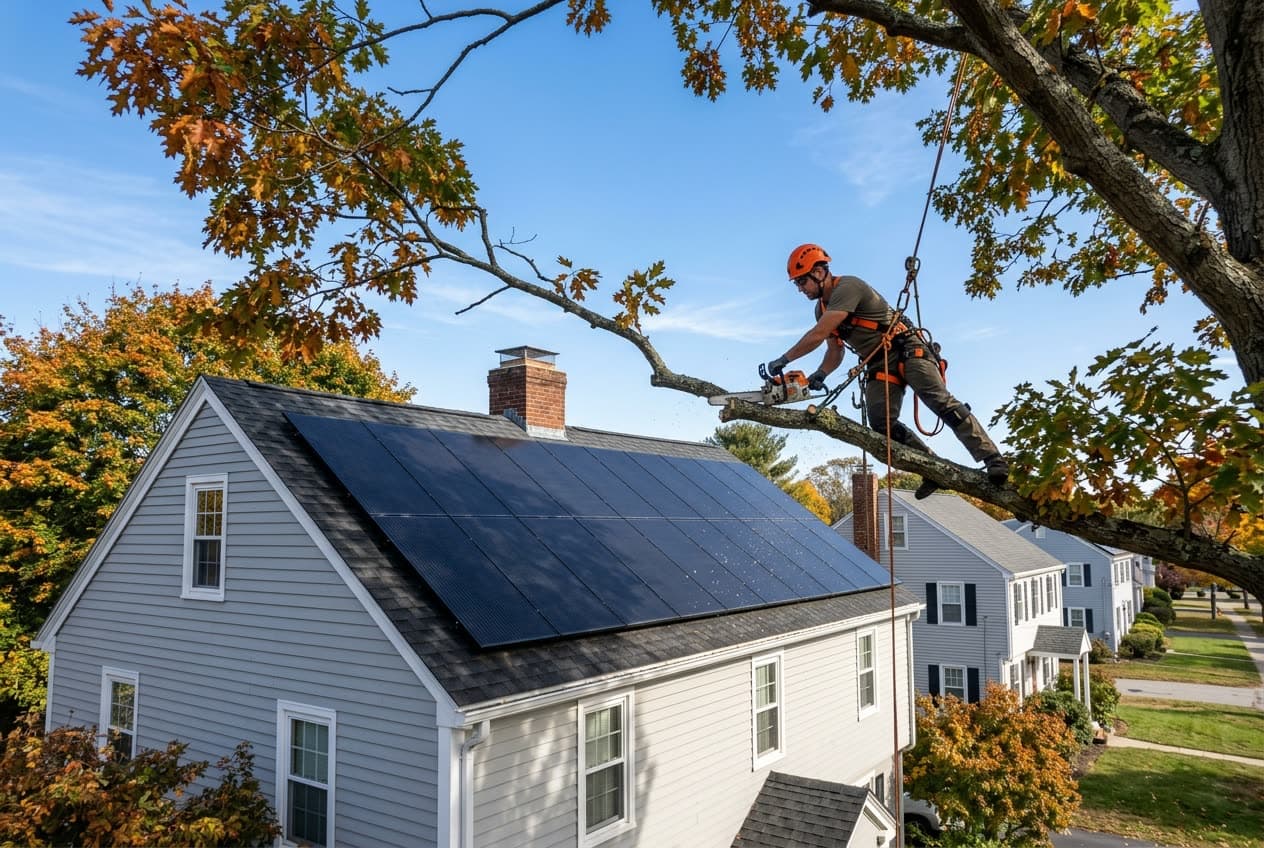
Sometimes, but start small. Once you know which trees shade the panel area at midday, trimming the branches that reach over or above the roof is often enough. Removing a tree makes the most sense when it's tall, close to the south side of the house and shades the roof for much of the day.
Before you take down a tree, weigh what it does for your home:
- Shade trees help keep a house cool. A tree that shades the roof in July lowers how hard your air conditioning works. Our post on whether your roof is a good fit for solar makes the same point.
- Trees take years to replace. The Department of Energy notes a slow-growing tree may need up to 10 years of growth before it shades a roof.
- Tree work is a job for a pro. Large limbs near a roof and power lines need a qualified tree service, not a ladder and a chainsaw.
Plan for growth, too. Trees that barely touch the roof today will be taller in 10 years, and your system is built for the long run, with a 25-year power production guarantee. If you plant new trees, keep tall ones off the side of the house your panels face. Low trees and shrubs are fine.
What if a neighbor's trees shade your roof?
This is common on smaller New England lots. The first step is the same as with your own trees: find out whether the neighbor's tree actually shades the panel area at midday. Often it only touches one corner, and the design simply works around it.
If it does matter, a friendly conversation is the place to start. Many neighbors are open to trimming branches that hang over your yard, especially if you offer to cover the cost. Talk it through before anyone cuts, and check your local rules first.
Keep in mind that you can't control how a neighbor's trees grow. If a tree next door is young and fast-growing, plan for more shade over time, not less.
When is there too much shade for solar?
Some roofs are simply too shaded. The Department of Energy says that if trees near your home create excessive shade on your roof, rooftop panels may not be the most ideal option. A roof under a full canopy for most of the day usually falls in that group, especially if the shade comes from tall evergreens on the south side.
Between a sunny roof and a deeply shaded one is a wide middle ground. A home with good midday sun on one or two roof faces, a few trimmable branches or shade only in the early morning often still works well. The production estimate tells you which side of the line you're on before you commit.
If the main roof is too shaded, ask about the rest of the property. A garage or addition out from under the trees may get much better sun than the house itself, and trimming one or two key trees can move a borderline roof into the workable range.
If solar isn't right for your home, we'll tell you. Call Evergreen Solar at (508) 507-2908, and we'll show you which of your trees matter, which don't and what your roof could produce. If your roof also needs work, see our solar + roof program.
Frequently asked questions
Do solar panels work in the shade?
They still make some power, but much less than in direct sun. A panel in light or partial shade keeps producing at a reduced rate, while a panel in deep shade makes very little. That's why designers place panels where the sun reaches them for most of the day and leave heavily shaded spots empty.
Should I cut down trees to install solar panels?
Not always. Start by finding out which trees actually shade the panel area during the middle of the day. Often trimming a few branches is enough. Removing a tree can make sense when it shades the roof for much of the day, but weigh the summer cooling it gives your home and have the work done by a qualified tree professional.
Is it better to have deciduous or evergreen trees near solar panels?
Deciduous trees, the kind that drop their leaves in fall, are usually easier to live with. They shade in summer but let more sunlight through in winter, the Department of Energy notes. Evergreens shade the roof all year. Either kind can be a problem if it stands tall on the south side of the panels.
What happens if trees grow and shade my solar panels later?
Production drops gradually as the shade grows, and your monitoring app will show it. Trimming the branches that reach the panel area usually brings production back. When you plant new trees, keep tall ones away from the side of the house the panels face so they won't shade the roof as they mature.
Your next step
Get a solar and roof assessment
We check your roof's condition, design your system, and price solar with or without a new roof. Free, with no pressure.
Get my roof + solar quoteKeep reading
How we wrote this
This page was written by the Evergreen Solar team, which designs and installs home solar across Massachusetts, Rhode Island, Connecticut, New Jersey and Pennsylvania. Program rules and rates change, so we check every figure against the primary source listed below and note the date we last did. If something has changed, tell us at our contact page.
Sources
- U.S. Department of Energy: Homeowner's Guide to Going Solar
- U.S. Department of Energy: Consumer Guide to Home Landscaping (Energy Saver)
- Building America Solution Center (PNNL, for DOE): Solar Orientation for Solar Arrays and Panels
- U.S. Department of Energy: Walk Me Through It, A Step-by-Step Guide for Consumers Going Solar