Key takeaways
- Solar panels have to come off before a roof under them can be replaced. A solar crew shuts the system down, removes the panels, wiring and racking, and stores them. The roofer then replaces the roof, and the solar crew reattaches and seals the racking, reinstalls the panels and turns the system back on.
- With Evergreen Solar, the system is usually offline for only a day or two while the panels are off. Because your panels make less than usual during that window, it helps to plan the work for a time of year when you'd lose the least production, though roof damage sometimes decides the timing for you.
- You don't always need a whole new roof. If the rest of the roof is in good shape, the section or slope under the panels can often be reroofed on its own. An inspection tells you which makes sense, so you aren't paying to replace shingles that still have years left.
- Many roofers won't touch solar panels, so you need a solar company involved either way. Hiring one company that handles the panels and the roof together gives you one schedule and one point of contact. If your system is leased or under a PPA, the company that owns it has to be part of the plan.
Maybe a storm tore off shingles, the roof is aging faster than expected, or you bought a home with solar already on it. Whatever the reason, the roof under your panels needs work. The panels will come off, but the job is routine when the right people handle it.
This article walks through why the panels come off, what happens step by step, how long you'll be offline, and how to protect your warranties. For the bigger picture on roofs and solar, see our guide to solar and your roof.
Why do solar panels have to come off before reroofing?
A roofer can't replace shingles they can't reach. Your panels sit on racking that is bolted through the roof into the rafters, and every attachment is flashed and sealed. To tear off old shingles and lay down new underlayment, the panels, racking and attachments all have to come off that part of the roof.
Working around the panels isn't a real option. Patching shingles at the edges of an array leaves the worn roofing underneath in place, and that is usually where trouble starts. CertainTeed, the shingle maker, puts it plainly: panels only last as long as the roof they sit on.
The timing gap is why this comes up so often. Solar panels last 25 to 35 years on average, according to a Berkeley Lab survey cited by the Department of Energy. Many existing asphalt roofs don't. InterNACHI puts 3-tab shingles at about 20 years and architectural shingles at about 30, so a roof that already had some age on it when the panels went up can wear out partway through their life.
What happens during solar panel removal and reinstallation?
The details vary by home, but the order is the same on nearly every project:
- Inspection and planning. The crew looks at the roof and the solar system, notes the condition of the panels and wiring, and decides whether the whole roof or just a section needs replacing.
- Safe shutdown. A qualified electrician or solar technician shuts the system down and disconnects it before anyone touches the panels. On our projects, that's the job of our solar team, which includes a master electrician.
- Removal and storage. Panels, wiring and racking come off, and everything is labeled and stored safely until it goes back up.
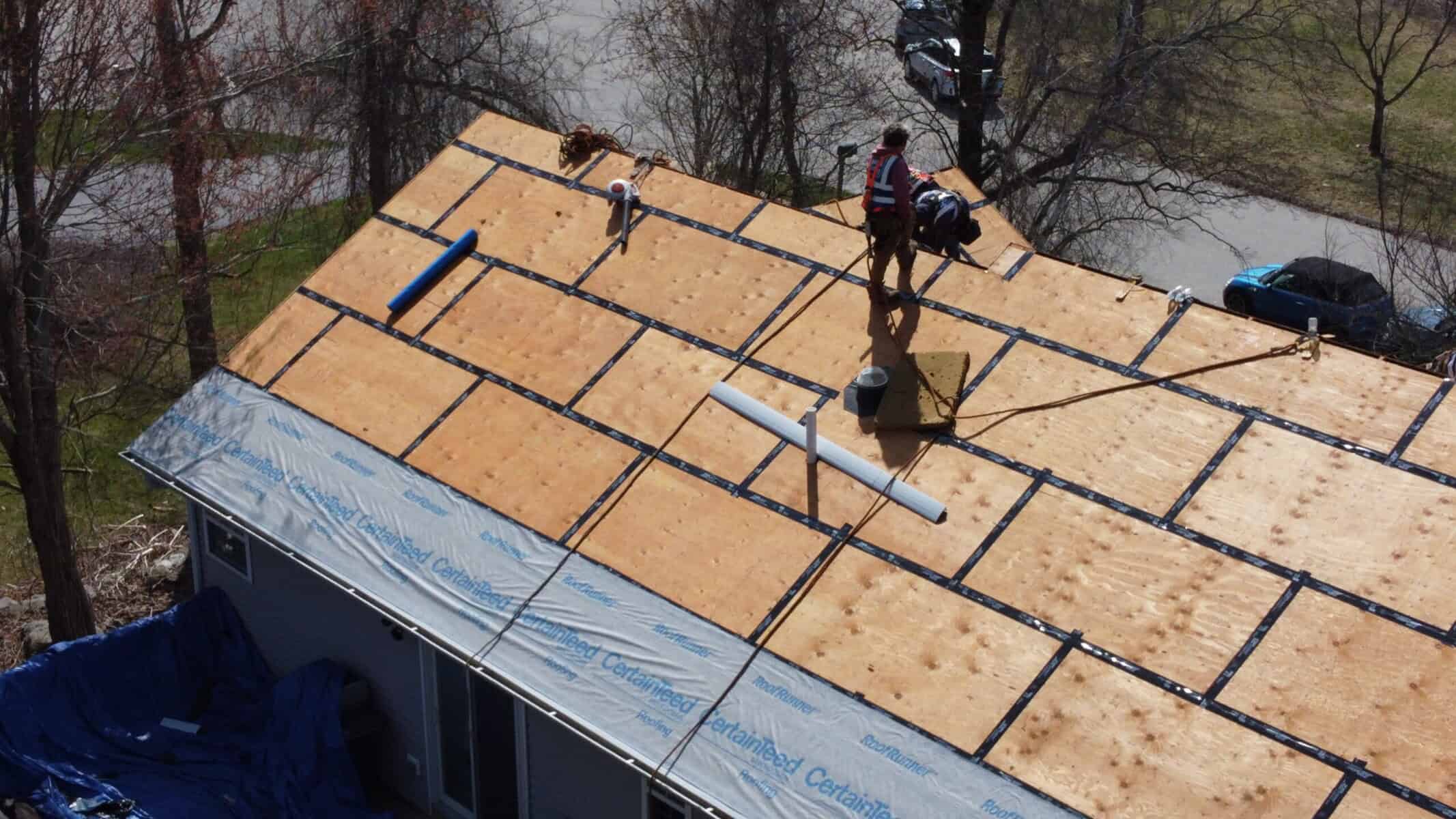
- Roof work. The roofer tears off the old roofing, repairs any damaged decking, and installs new underlayment and shingles.
- Racking reattached and flashed. The solar crew bolts the mounts back into the rafters and flashes and seals each one into the new roof, so water runs over it instead of into it.
- Panels reinstalled and reconnected. The panels go back on the racking and are rewired.
- Testing, permits and inspection. The system is tested, any required town inspection is completed, and the system is switched back on. If you have a monitoring app, it should show production again once it is.
Evergreen Solar handles the permits and inspections on these projects, so you don't have to juggle paperwork with the town.
How long will your solar be offline?
With Evergreen Solar, the system is usually offline for only a day or two, depending on the size of the system and how complex the roof is. The panels come down, the roof goes on, and the panels go back up with as little gap as possible.
Planning ahead makes that window matter even less. If your roof isn't an emergency, schedule the work when your panels make less power anyway, like a short stretch in late fall or winter, so the lost production is smaller. If a storm caused the damage, protecting the house comes first and the schedule follows.
Do you need a full roof or just the section under the panels?
Not every roof with solar needs a full replacement. If the rest of the roof is in good shape, the section or slope under the panels can often be reroofed on its own. That's the part that's hard to reach later, so it makes sense to fix it while the panels are off.
A partial reroof usually makes sense when:
- The damage or wear is limited to the slope under the array.
- The other slopes are newer or in clearly better condition.
- Matching shingles for color and style is possible, so the roof doesn't look patched.
A full replacement is the better call when the whole roof is near the end of its life. Taking the panels down twice, once now and again in a few years when the other slopes fail, costs more than doing it once.
Who should remove and reinstall your solar panels?
You need two skills: roofing and solar. Many roofing companies won't touch solar panels, and the electrical side of the job belongs with a licensed electrician or solar technician. That leaves two common approaches.
| A roofer and a solar company, hired separately | One company that handles both | |
|---|---|---|
| Scheduling | You line up two crews and their calendars | One schedule, set by one team |
| Point of contact | Two companies to call | One |
| Panel handling | Solar company removes and reinstalls | Same team that plans the roof work |
| If a leak shows up later | Each may point to the other | One company stands behind the job |
If you hire separately, get both companies talking before work starts, and confirm who reseals the roof mounts. That's where gaps in responsibility tend to show up.
Evergreen Solar handles the whole job for homes that already have solar. Our solar team removes and reinstalls the system, and our roofing partner, Global Roofing, a CertainTeed Select ShingleMaster, replaces the roof with CertainTeed shingles. See our roof replacement service for homes with solar panels to start a project.
How do you keep your warranties intact?
There are two sets of warranties in play: the one on your solar system and the one on your roof. Before anyone climbs a ladder, read both. Some solar warranties set rules about who may remove or reinstall the equipment, and roof warranties care about how penetrations through the roof are sealed.
Done correctly, removal and reinstallation shouldn't cost you coverage. Our process is designed to keep your warranties intact. Our post on whether solar panels void a roof warranty covers the roof side in more depth.
If your system is leased or under a power purchase agreement, the company that owns it has to be part of the plan. With a lease or PPA, the system owner usually handles maintenance and repairs, which is one of the perks for you. Check your contract to see how it handles removal for roof work, and call the owner early so the schedule works for everyone. Our article on solar panel maintenance explains what the system owner covers.
Can you add panels or a battery while they're off?
Yes, and it's a good moment to ask. Your system was designed around your electric use when you first went solar. If you've since added an electric vehicle or a heat pump, your system may not keep up anymore, and with the roof open and the crew already there, adding panels fits naturally into the project.
The same goes for a battery. A battery stores solar power for use at night or during an outage, and the wiring work can often happen while the system is already shut down. Ask about it during the inspection, so the new equipment is part of the design from the start.
Questions about your roof and your panels? Call us at (508) 507-2908, and we'll look at what your roof needs and how to get your system back up quickly.
Frequently asked questions
Can a roofer remove solar panels?
Some can, but many roofing companies won't touch solar panels, and the electrical side of the job belongs with a licensed electrician or solar technician. The safest path is a solar company that removes and reinstalls the system, working with a roofer or offering the roof work itself. That also keeps one company responsible for the system working when it goes back on.
How long does it take to remove and reinstall solar panels?
With Evergreen Solar, the system is usually offline for a day or two, depending on the size of the system and the roof work. The full project can take longer once you count the inspection, any permits and scheduling, but the panels themselves are off the roof for only a short window.
Do I need permits to remove and reinstall solar panels?
Often, yes. Many towns require permits for reroofing and for reconnecting electrical equipment, and some require an inspection before the system goes back into service. The rules vary by town. Evergreen Solar handles the permits and inspections for the projects we do, so you don't have to sort out the paperwork.
Will removing my solar panels void the warranty?
It shouldn't if the work is done correctly by a qualified crew, but warranties differ, so read yours before the work starts. Some solar warranties set rules about who may remove or reinstall the equipment. Evergreen Solar's process is designed to keep your solar and roof warranties intact.
Your next step
Get a solar and roof assessment
We check your roof's condition, design your system, and price solar with or without a new roof. Free, with no pressure.
Get my roof + solar quoteKeep reading
How we wrote this
This page was written by the Evergreen Solar team, which designs and installs home solar across Massachusetts, Rhode Island, Connecticut, New Jersey and Pennsylvania. Program rules and rates change, so we check every figure against the primary source listed below and note the date we last did. If something has changed, tell us at our contact page.
Sources
- U.S. Department of Energy: Replacing Your Roof? It's a Great Time to Add Solar (July 2021)
- U.S. Department of Energy: End-of-Life Management for Solar Photovoltaics (panel lifespan)
- U.S. Department of Energy: Walk Me Through It, A Step-by-Step Guide for Consumers Going Solar
- CertainTeed: Adding Solar to Your Roofing
- InterNACHI: Standard Estimated Life Expectancy Chart for Homes