Key takeaways
- As a rule of thumb, a roof under about 15 years old and in good condition is usually ready for solar panels. If your roof is older, Evergreen Solar usually recommends replacing it as part of the solar project. Either way, the roof is inspected before anything is installed, so the decision rests on its actual condition.
- Roof age matters because solar panels last 25 to 35 years on average. If your existing roof wears out partway through that, the panels have to come off and go back on around the roof work. Checking the roof first means it lasts as long as the panels do.
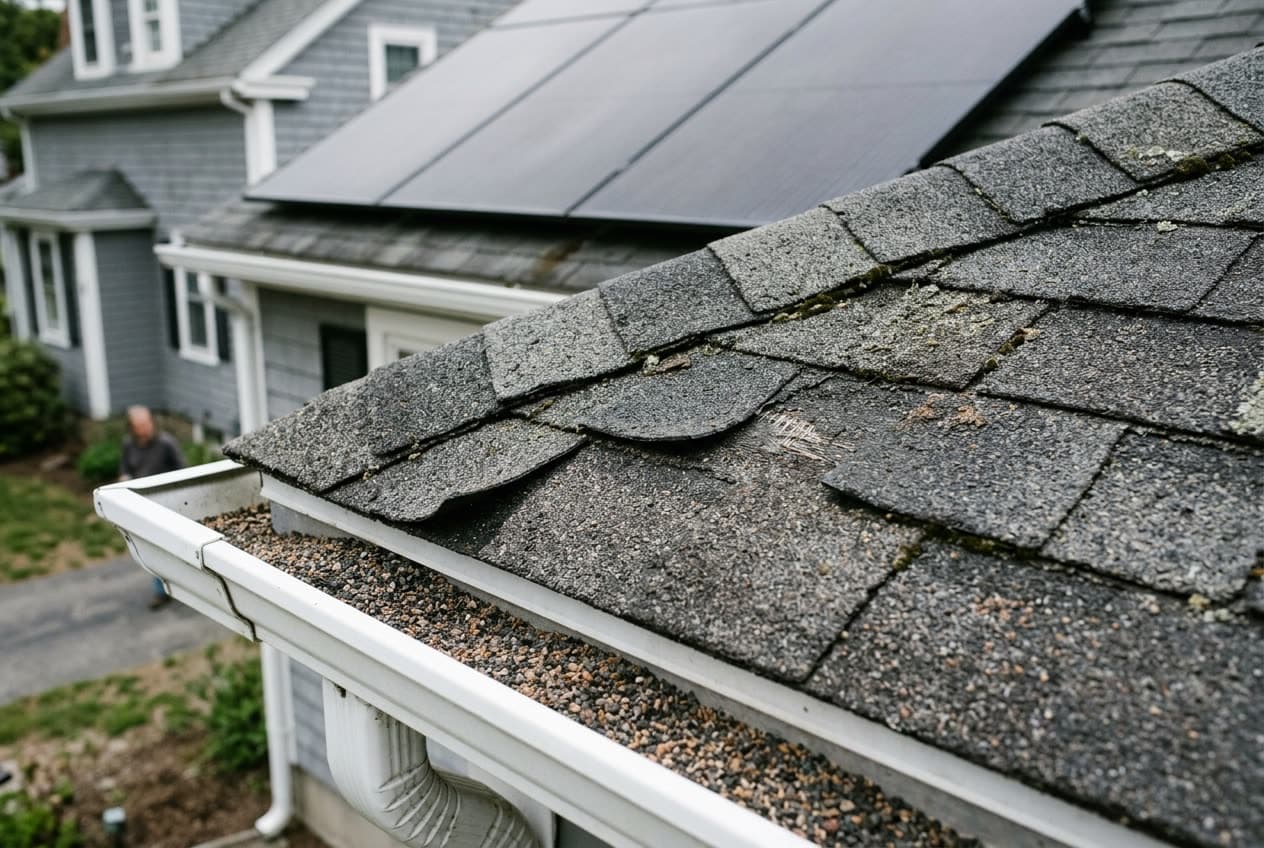
- Condition can matter more than the number. Curling, cracked or missing shingles, granules in the gutters, soft spots, sagging or past leaks all point to a roof nearing the end of its life, even if it isn't that old. A well-kept roof may have more life left than its age suggests.
- There's no minimum newness. A roof installed last year, or last month, is an ideal base for solar. If your roof needs replacing, Evergreen Solar's solar + roof program includes the new roof with your solar installation at a reduced price, and the total package often costs less than your current electric bill.
One of the first questions homeowners ask us is whether their roof is too old for solar panels. It's a smart question. Your panels will sit on that roof for decades, so the roof needs to be ready for the job.
This article covers how old is too old, how long your existing roof is likely to last, the signs that matter more than its age, and what to do if it's due. For direction, shade and roof type, see our guide to solar and your roof.
Why does roof age matter for solar panels?
It comes down to two clocks. Solar panels last 25 to 35 years on average, according to a Berkeley Lab survey cited by the Department of Energy. Your roof has its own clock, and it started ticking the day it was installed.
When the roof runs out first, the panels have to come off before it can be replaced, then go back on afterward. CertainTeed, the shingle maker, puts it simply: panels only last as long as the roof they sit on. That's why the Department of Energy tells homeowners to consider their roof's age and how soon it will need replacing before they go solar.
The goal isn't a perfect roof. It's a roof that will outlast the panels, or close to it, so the system can run for its whole life without being taken down.
How old is too old? Our rule of thumb
There's no legal cutoff and no single number that fits every roof. Here is how we think about it at Evergreen Solar:
- Under about 15 years old and in good condition: usually ready for solar as it is.
- Older than about 15 years: we usually recommend replacing the roof as part of the solar project, so it's done once, before the panels go on.
- Any age with visible damage or past leaks: the roof needs attention first, whatever year it went on.
Why about 15 years? The panels will be up for 25 years or more. By InterNACHI's estimate, a 3-tab roof that's already 15 has only a few years left, and an architectural roof at that age is about halfway through its life. Putting panels on it means planning to take them down again at some point. Replacing the roof now avoids that second project and the days your system would sit offline during it.
Either way, we inspect the roof before anything is installed. The inspection, not the number alone, makes the final call. Our article on what happens at a solar site visit walks through what the crew checks.
How long does your existing roof last?
It depends on the material. InterNACHI, the home inspectors' association, publishes typical life spans for roofing, assuming regular maintenance and normal conditions. These figures describe the roof you have now, not a new one.
| Roofing material | Typical life | What it means for solar |
|---|---|---|
| Asphalt shingles, 3-tab | About 20 years | Often due for replacement before or soon after solar |
| Asphalt shingles, architectural | About 30 years | A good base if it's still young and in good shape |
| Metal | 40 to 80 years | Usually outlasts the panels when in good condition |
| Flat roof, EPDM rubber | 15 to 25 years | Check its age closely before adding panels |
| Flat roof, TPO | 7 to 20 years | Check its age closely before adding panels |
| Flat roof, modified bitumen | About 20 years | Check its age closely before adding panels |
New England weather is hard on roofs. Freeze-thaw cycles, ice dams and heavy snow can shorten these spans, so a roof in a tough spot may wear out sooner than the chart suggests. Evergreen Solar installs on asphalt shingle, metal and flat roofs, but not on slate.
What signs matter more than your roof's age?
A 12-year-old roof that took a beating can be in worse shape than a 20-year-old roof that was well cared for. From the ground or the attic, look for:
- Curling, cracked or missing shingles. Shingles that lift at the edges or have broken off let water reach the layers below.
- Granules in the gutters. Asphalt shingles shed their gritty coating as they age. A lot of it in the gutters or at the bottom of downspouts means the shingles are wearing thin.
- Bare or dark patches. Spots where the coating is gone show where the roof is wearing fastest.
- Soft spots or sagging. A roofline that dips, or decking that feels spongy, can point to water damage underneath.
- Leaks or stains. Water stains on ceilings, or past leaks around chimneys, vents or skylights, are worth mentioning before solar goes on.
Don't climb onto the roof to check. Binoculars from the yard and a flashlight in the attic will tell you plenty. Our checklist on whether your roof is good for solar covers the other things that make a roof a fit.
What if you don't know how old your roof is?
That's common, especially if you bought the house with the roof already on it. A few places to look:
- Your home inspection report from when you bought the house often estimates the roof's age and condition.
- The seller's disclosure or closing papers may list when the roof was replaced.
- Your town's building department may have a permit on file for the last reroof.
- Old receipts or warranty papers from a roofing company show the install date.
If none of that turns up, don't worry. An installer's roof inspection looks at the condition directly, and condition is what matters most.
Is a brand-new roof too new for solar?
No. There's no minimum age and no waiting period. A roof installed last month is the ideal base for solar panels, because it starts its clock at the same time as the panels.
If you're planning a new roof anyway, talk to a solar company before the roofer starts. Doing both at the same time means one plan and one schedule. Our post on getting a new roof and solar panels at the same time explains why so many homeowners do both together.
If your roof was just replaced, keep the roofer's warranty papers handy. Your solar installer will want to know what shingles were used and how the roof warranty treats work done on top of it.
What does replacing your roof first look like?
If your roof is older or showing wear, the simplest path is to replace it as part of the solar project. With Evergreen Solar's solar + roof program, the new roof is included with your solar installation at a genuinely reduced price, with $0 out of pocket, and the total package often costs less than your current electric bill. It works whether you buy the system or lease it.
The work itself is quick. The roof typically goes on in one day and the solar in another, with one team coordinating both.
Roofs from the solar + roof program
We install CertainTeed shingles through our roofing partner, Global Roofing, a CertainTeed Select ShingleMaster. The roof comes with 50-year coverage on materials and labor and a 25-year workmanship warranty, so it's built to outlast the panels on top of it.
Our article on the roof + solar package explains how the roof is included and paid for, and you can see finished projects on the solar + roof program page.
Not sure where your roof stands? Call us at (508) 507-2908. We'll inspect it as part of your solar design and tell you honestly whether it's ready.
Frequently asked questions
Is a 20-year-old roof too old for solar panels?
Often, yes. At 20 years, an asphalt roof is past Evergreen Solar's rule of thumb of about 15 years, so we usually recommend replacing it as part of the solar project. InterNACHI puts 3-tab shingles at about 20 years. An architectural shingle roof in very good condition may have more life left, so the inspection decides. If it needs replacing, doing it as part of the solar project avoids removing the panels later.
Can you put solar panels on a 10-year-old roof?
In most cases, yes. A 10-year-old roof in good condition is well within Evergreen Solar's rule of thumb of under about 15 years. The roof is still inspected first, to check for damage, soft spots or past leaks that age alone doesn't show.
Can you put solar panels on a brand-new roof?
Yes. A new roof is the best base for solar panels, and there's no waiting period after it's installed. If you're about to replace your roof anyway, it's worth getting a solar quote at the same time, since doing both together means one project and one schedule.
How do I find out how old my roof is?
Start with your paperwork. Your home inspection report, the seller's disclosure or old receipts from a roofing company often show when the roof was installed. Your town's building department may have a permit on file for the reroof. If none of that turns up, a roof inspection during a solar site visit tells you the roof's condition.
Your next step
Get a solar and roof assessment
We check your roof's condition, design your system, and price solar with or without a new roof. Free, with no pressure.
Get my roof + solar quoteKeep reading
How we wrote this
This page was written by the Evergreen Solar team, which designs and installs home solar across Massachusetts, Rhode Island, Connecticut, New Jersey and Pennsylvania. Program rules and rates change, so we check every figure against the primary source listed below and note the date we last did. If something has changed, tell us at our contact page.